 CONSUMER_APP_INDEX
Blog · June 11, 2026 · ~7 min read
CONSUMER_APP_INDEX
Blog · June 11, 2026 · ~7 min read
Wunderman's 1977 “Gold Box” cut CAC from $18.60 to $4. The 2026 version is a spin-wheel that always lands on −62%
In 1977, the man who coined “direct marketing” hid a gold box in Columbia Record Club's print ads and let TV viewers earn a free record. Response rose 80% and cost per new member fell from $18.60 to $4.00 — by his own count. We just walked 26 quiz-funnel paywalls running the 2026 version: timers that restart, wheels that can't lose, and fine print that takes the prize back.
Consumer App Index · June 11, 2026
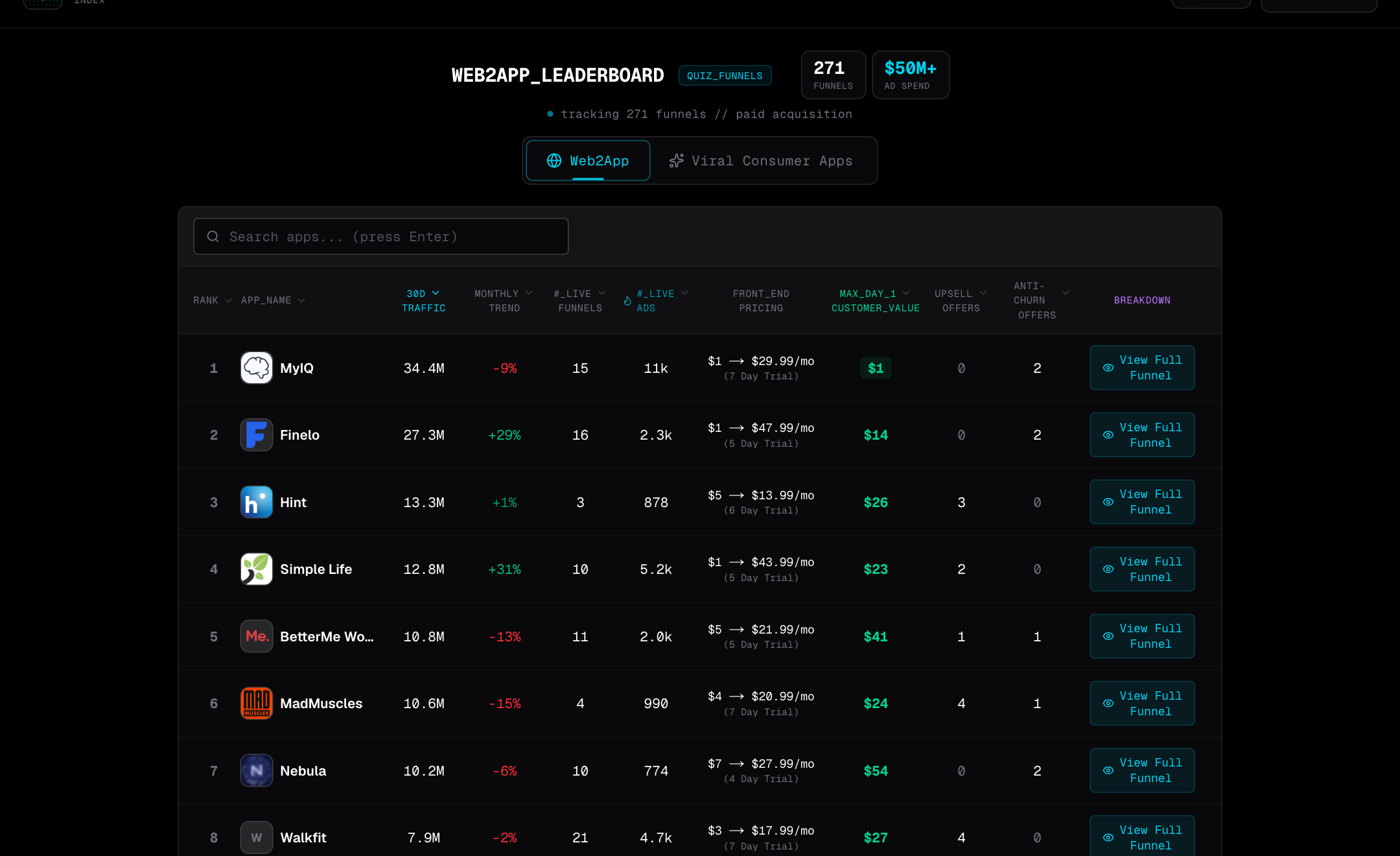
The “Bloomberg Terminal” for Web2App Quiz Funnels
Track the ads, funnels, and pricing of every major player — and catch the latest moves in web2app and consumer apps before your competitors do.
Already a member? Open the terminal → the latest is already inside
- 📦 The 1977 incentive that was earned, real, and measured in a 13-vs-13 market holdout
- 🎡 Two spin-wheels, two recorded spins, two maximum jackpots — and the fine print that retracts them
- 🥷 The Gold Box Standard: 4 checks your urgency has to pass before an aware buyer laughs at it
The casino where nobody loses
We watched 26 quiz-funnel paywalls close. 23 of them used the same clock.
An 8–12 minute countdown, pinned next to the buy button, with one verb dominating: your discount is “reserved.” Kegel-plan: “51% Discount reserved for 09:39.” Paw-champ: “Reserved price for: 09:29.” Hypnozio: “75% Discount only valid for 00:09:19.” Refresh the page, the clock starts over. Every time.
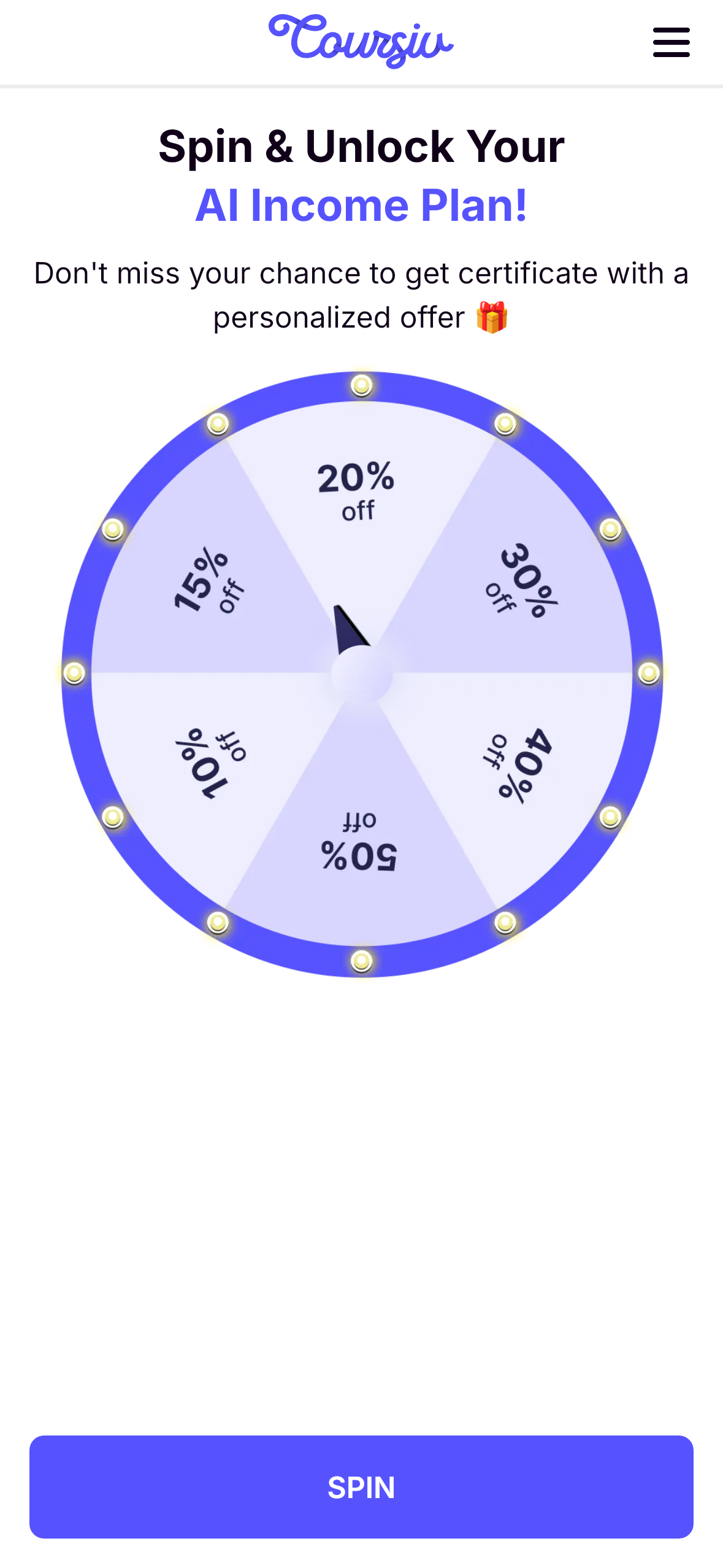
And before the clock, some funnels add a wheel. MadMuscles dims its paywall and asks you to “Spin and win extra discount of up to -62%.”
Our spin won −62%.
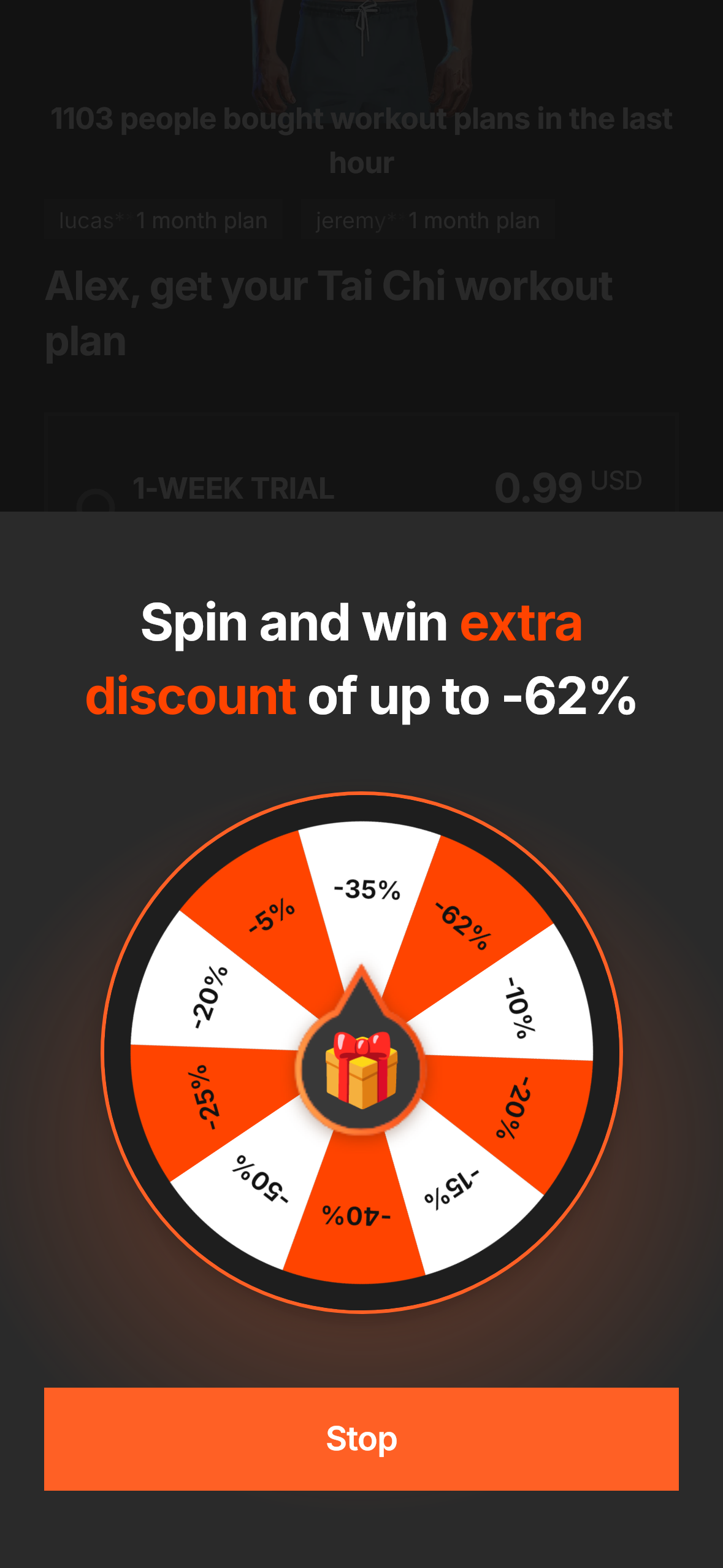
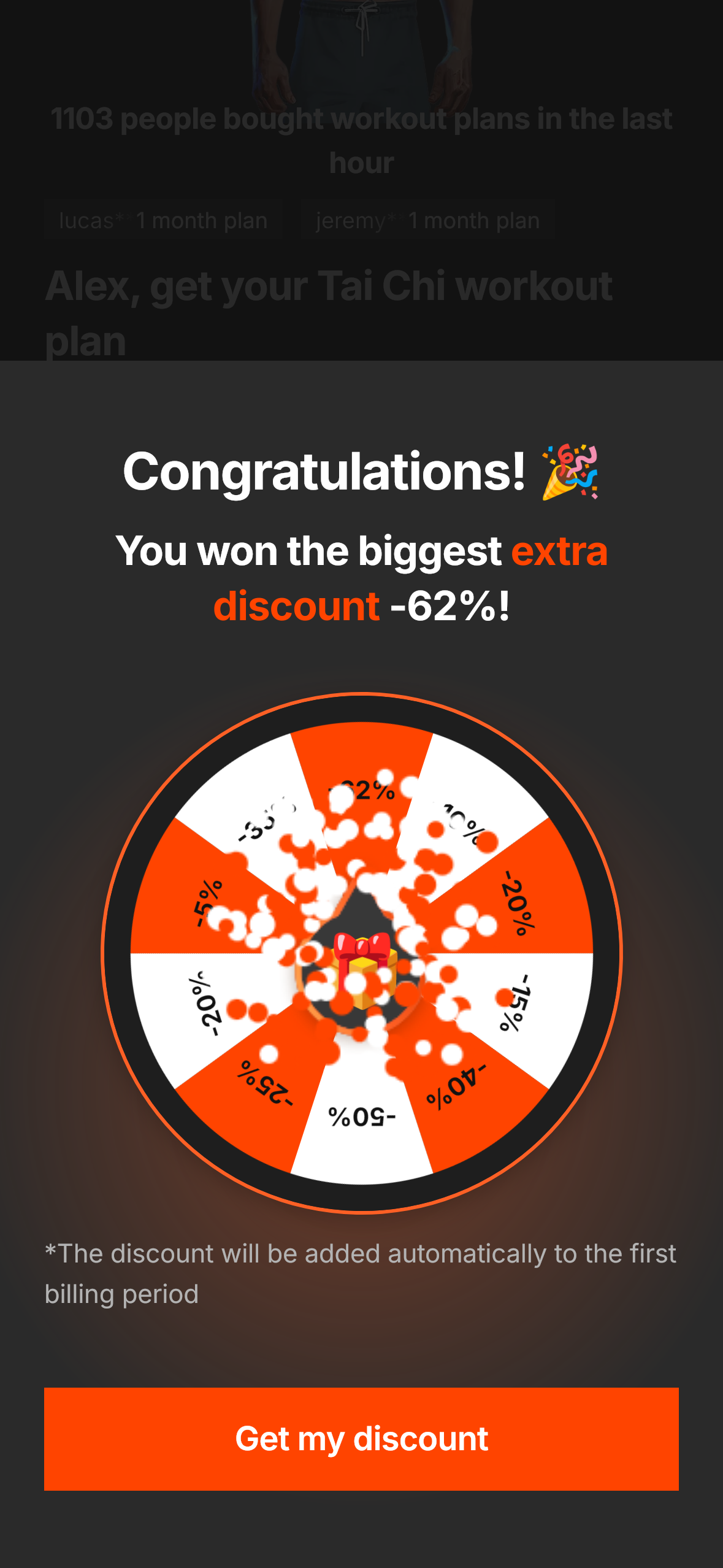
Did you catch that? Up to −62% — and the recorded spin hit exactly −62%. Coursiv's wheel maxes at 50%; our capture won exactly 50%. Two recorded spins in the corpus, two maximum jackpots. We have never captured a losing spin.
a countdown
won the max
struck anchors
(keep reading)
You already know the timers are fake. Everyone does. The industry's defense is that it doesn't matter — it's harmless theater, and it converts.
Here's the uncomfortable part: the man who invented this device built it real. And by his own numbers, the realness is where the money was.
The Museum Tour1977: the wheel that was real
Lester Wunderman had run Columbia Record Club's direct ads for years. In 1977, Columbia flirted with handing the TV budget to McCann Erickson — the big-brand agency. Wunderman asked for a split test instead: 26 markets, 13 for McCann, 13 for him.
McCann bought prime time. Wunderman bought cheap fringe slots in the pre-dawn hours — about a quarter of McCann's media spend, per the retellings — and added one device. His TV spots told viewers about the “secret of the Gold Box”: go find the gold box hidden in Columbia's print ads in TV Guide and Parade, write any record from the list into it, and that record is yours free.
The viewer had to do something to win. Watch the spot, hunt the box, fill it in. The reward was a real extra record, shipped.
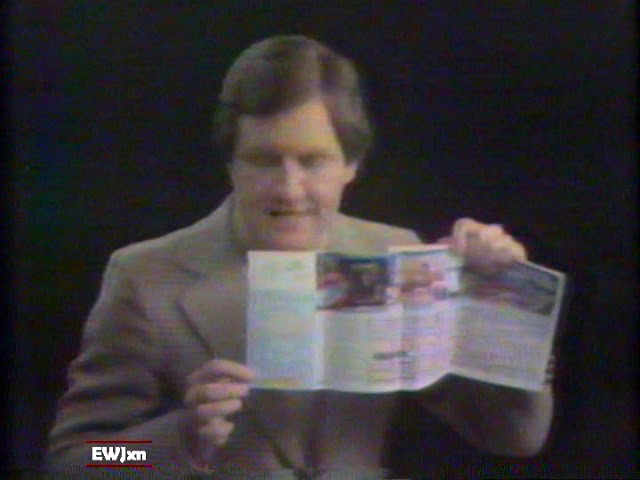
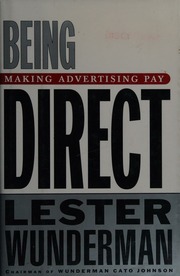
The results, per Wunderman's own telling: response in his 13 markets rose 80%. In McCann's 13 prime-time markets, 19.5%. Cost per new member fell from $18.60 to $4.00. In 1977 none of Columbia's magazine ads had been profitable; in 1978, with Gold Box TV running behind them, every magazine on the schedule made money.
Every 1977 number here is Wunderman's own account — from his memoir, retold by Gladwell. Nobody independently audited a 49-year-old matched-market test, and winners write their case studies. We print it as the legend it is. What survives scrutiny either way is the mechanism — and the mechanism is the point.
What the Gold Box actually did
Three jobs in one device. Earned: the customer worked for the bonus — watched, hunted, filled it in — which beats the same bonus merely handed over. Real: the prize changed the actual offer; a real record really shipped. Measured: only TV viewers knew the secret, so every coupon with the box filled in was a TV-attributable response — a cross-channel incrementality meter, in print, in 1977, decades before anyone said “incrementality.”
Hold those three properties. Now back to 2026.
The Anatomy2026: the wheel that can't lose
The quiz-funnel industry rebuilt Wunderman's device beat for beat — the ritual where a discount gets won instead of given. Then it removed all three properties.

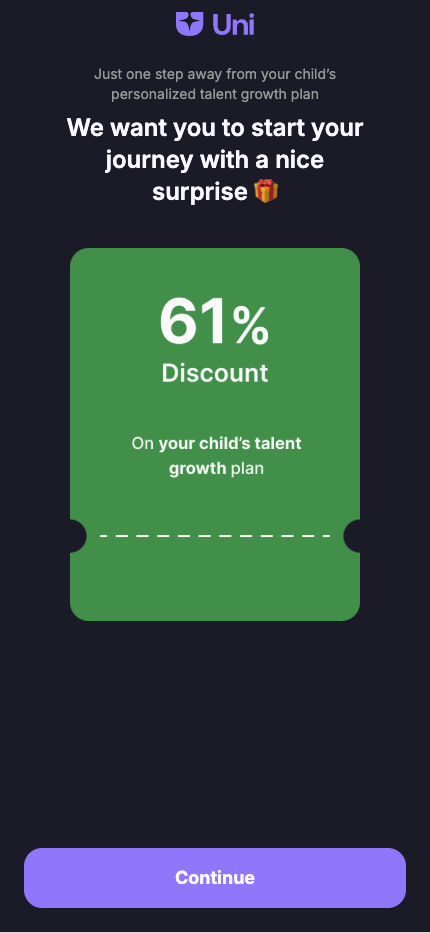
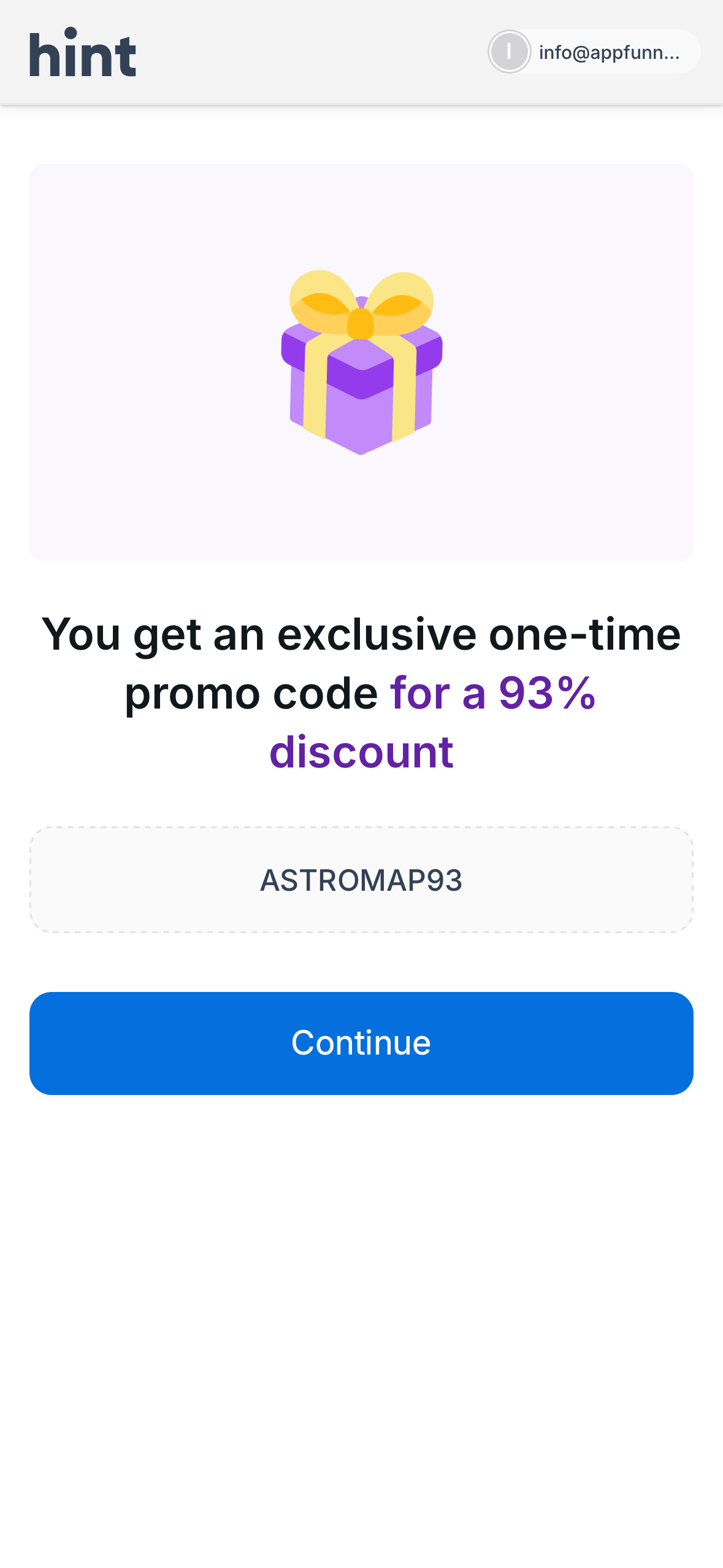
Where there's no wheel, there's a gift. Hint hands you “an exclusive one-time promo code for a 93% discount” right before checkout. Uni opens its paywall with a coupon ticket: a 61% discount on your child's talent plan, presented as “a nice surprise 🎁.” The surprise is the paywall's opening screen.
And over it all, the clocks. Holispira runs two timers on one screen — a header bar and an in-page banner — both reading 07:52. Two clocks, one screen, zero deadlines.
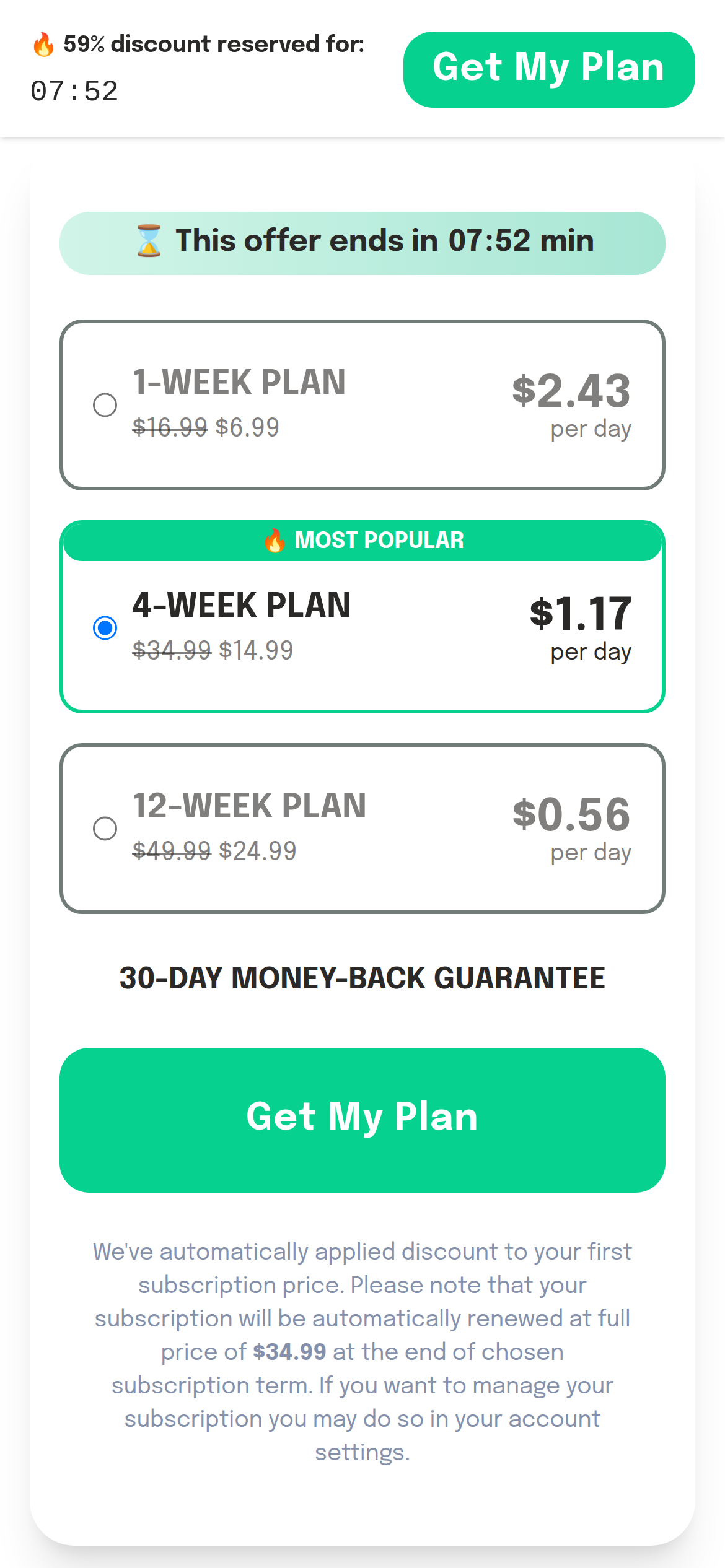
The fine print takes the prize back
Here's where the 2026 version stops being a degraded copy and becomes an inverted one. MadMuscles' own fine print, under the −62% jackpot: “The discount will be added automatically to the first billing period.” The renewal swallows the entire theatrical win. Across the corpus, 34 of 68 priced funnels strike through an “original” price — and that struck price is usually just the renewal you'll be paying anyway. The limit case is rise-guide, which strikes $79.99 down to $39.99 and then renews at $82.99 per 12 weeks — above its own struck anchor. (That crop gets the full treatment in our pricing-anchor issue; one exhibit per unicorn.)
So the “win” fails on its own terms: the wheel can't lose, the prize doesn't survive into the second charge, and the timer doesn't survive a refresh. One of 26 paywalls in our sample ran a countdown tied to a real date — Babbel's Cyber Monday clock. One.
Wunderman's incentive worked on people who could verify it: the box was really printed, the record really arrived. The 2026 wheel works only on people who don't look closely — and trains everyone who does to discount everything else on your page. An earned incentive compounds. A rigged one is a loan against your own believability, repaid at renewal time as churn and chargebacks. Our read: the difference isn't ethics, it's asset vs. liability.
Ok, the museum was fun. How do I apply this?
Hold your own paywall — or a competitor's — to the 1977 bar. Four checks, one per Gold Box property (plus the one modern browsers added for free):
- Real customer trigger. The buyer does something to unlock it — finds, watches, returns, completes. Not “loads the page.”
- Changes the actual offer. The reward survives past the first billing period. A discount the renewal swallows is not a reward.
- Survives a page refresh. Same state on reload, screenshot-safe. If F5 resets your deadline, you don't have a deadline.
- Measurable in a holdout. You can name the markets, cohort, or channel that didn't get it — and read the difference.
Fail one and you're spending trust to rent urgency.
The worked example: falsify a wheel in 3 clicks
This is the audit we run on every captured funnel — steal it.
Refresh. Reload the paywall. MadMuscles-style timers restart from the top; every one of the 23 countdowns we examined — except Babbel's calendar-dated Cyber Monday clock — resets per session. A real deadline survives F5. Decline. Close the offer and re-enter the funnel. If the “expired” discount greets you again at full theatrical strength, it never expired. Return. Walk away at the price and the funnel often plays the same card before you've even left: Hint's 93% code appears in-funnel, right before checkout; Nebula dangles a $1 “Secret Discount” at anyone heading for the exit. The “expiring” deal doesn't expire — it improves for whoever hesitates.
Score the funnel against the four checks. The 2026 wheel goes 0-for-4: no trigger (the spin is decorative), no offer change (first billing period only), dies on refresh, measured never. The 1977 box went 4-for-4 — the trigger was a treasure hunt, the record really shipped, print is refresh-proof by physics, and the whole thing ran inside a 13-vs-13 matched-market holdout.
1. Run the refresh/decline/return audit on your own funnel today. Three clicks, ten minutes. Anything that dies to a refresh button is something your most-aware 10% of buyers — the ones who screenshot, compare, and post — already know is fake. Decide on purpose whether that's a trade you want.
2. Build one Gold Box: a real, earned, cross-channel bonus. Hide the unlock in one channel (your email tells them the “secret”; the checkout page has the box), make the reward real and renewal-proof, and read redemptions as your incrementality meter. That's the part of 1977 nobody copied: the gift that doubles as the measurement. Modest expectations — you're not cutting CAC 4.6x like the legend says. You're building an urgency element you'll never have to hide from a regulator.
Crumbs from the same table
- 🐶 The purest theater in the corpus: Paw-champ runs a “Reserved price” countdown over an intro price that equals its own renewal — $49.99/mo either way. A timer guarding a discount of zero.
- ⏱️ Timer census: observed range 02:52–14:52, “reserved” is the dominant verb (7 of 23), and every single one restarts per session — except Babbel's (see below).
- 🧠 The IQ funnels skip wheels entirely — they prefer clocks (iq-brain: “We Guarantee Discount Until 09:58”). When your product is a blurred score, the wheel is redundant; curiosity is already the casino.
- 📅 Babbel's was the only countdown in 26 paywalls tied to an actual calendar date (Cyber Monday: “2 DAYS 10 HOURS 19 MINUTES”). The mainstream brand runs the realest clock. Sit with that.
Every exhibit above is a click away.
Already a member? → The full wheel/timer/ticket captures — MadMuscles, Coursiv, Holispira, Uni, Hint and 100+ more walked funnels — live in the terminal, fine print included.
Not yet? → We screenshot the paywalls, decode the fine print, and keep the receipts so you don't have to spin anyone's wheel — across 250+ web2app and consumer apps, updated weekly.
Get full access to every capture →
Homework. Open your funnel and name one urgency element that survives an FTC screenshot and a refresh button. If you find one, you're ahead of 25 of the 26 funnels we walked. If you can't — you know which box to build. Hit reply with what you found; the best answer gets dissected (kindly) in a future issue.
Wunderman's wheel couldn't lose either. The difference is the customer did the spinning.
Was this post 🥛 fire / 🫗 mid / 🧀 expired? Tell us — it changes what we dig into next.
The latest web2app insights, at your fingertips
THE AD (it's ours, it's short)
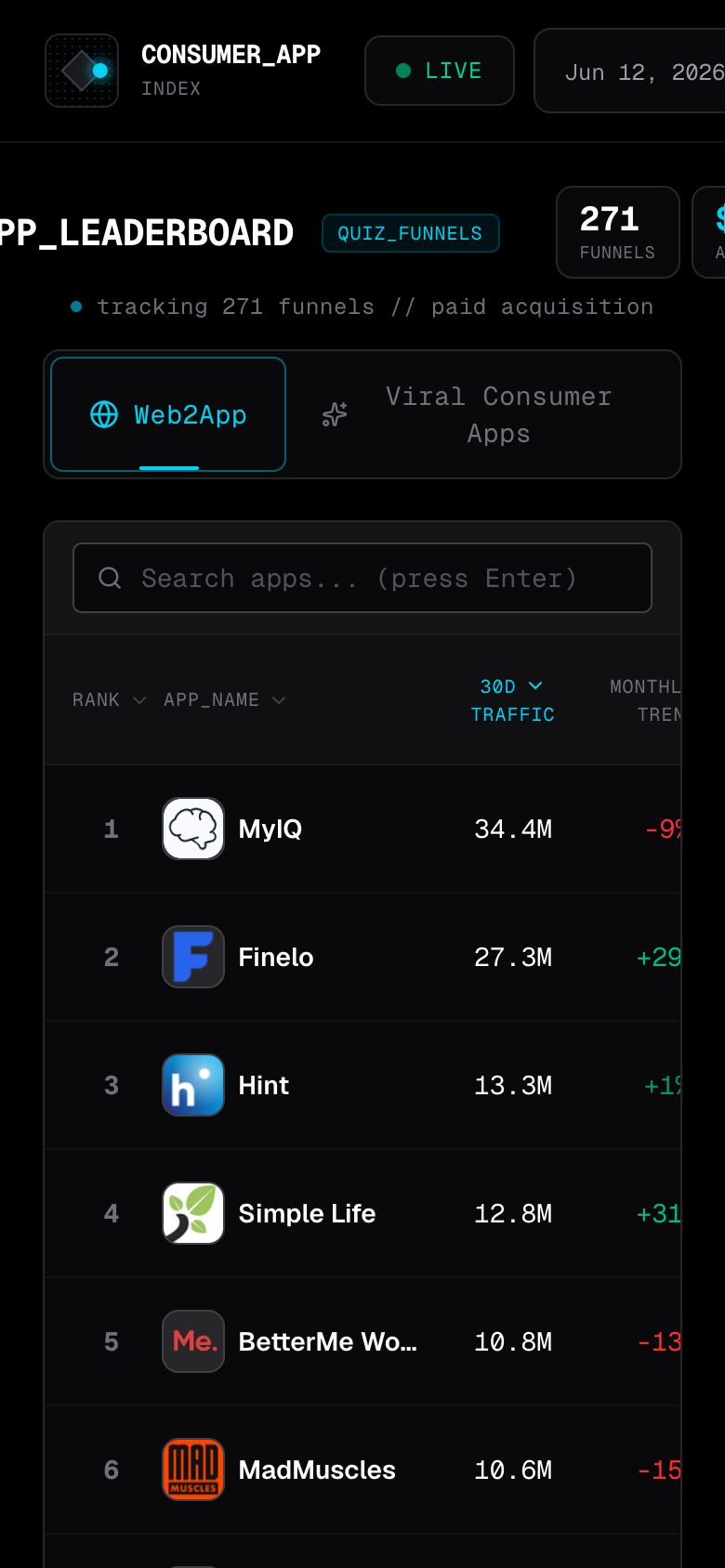
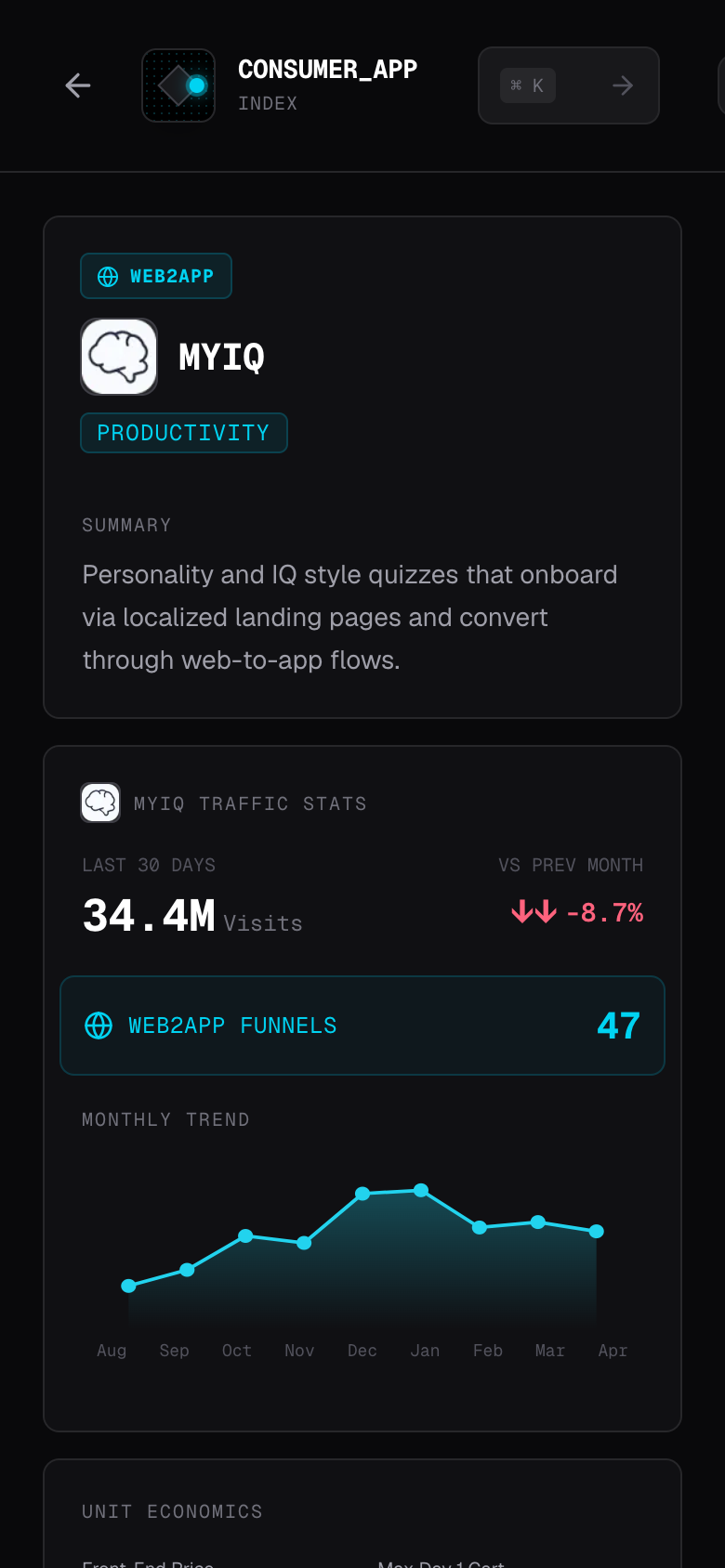
Everything above came out of one terminal: 250+ web2app apps — every Meta and YouTube ad library, every paywall capture, every cancel flow we could physically click through — plus the private community where this stuff surfaces before it gets written up. We buy everything so you don't have to.
One member, verbatim: “this shouldn't be public.”
The dare: if you don't find one ad, one quiz flow, or one retention offer that makes you more money — tell us, full refund.
(Members: skip this box. You are this box.)
Already a member? Go here to see the latest inside the app →
Sources: our own funnel captures, dates as labeled (Dec 2025 – May 2026; prices rotate monthly) · Meta Ad Library scrapes · SimilarWeb estimates via Apify. Gold Box history: Lester Wunderman, Being Direct: Making Advertising Pay (1996), as retold in Malcolm Gladwell, The Tipping Point, ch. 3 — all 1977–78 figures are Wunderman's own account. Commercial frame via YouTube; book scan via the Internet Archive.
100+ captured quiz funnels, paywalls included: consumerappindex.com/terminal — already a member? That link is your fastest way back in.
