 CONSUMER_APP_INDEX
Blog · June 11, 2026 · ~8 min read
CONSUMER_APP_INDEX
Blog · June 11, 2026 · ~8 min read
A $48M company was running your web2app quiz funnel in 1961. Here’s the 6-beat playbook — and the one beat that sets your ceiling.
The verdict screen — the moment a quiz says you qualify — is the highest-converting sentence in a web2app funnel. The Famous Writers School built that engine in 1961 and grew the company behind it to $48M. It also proved the one beat that sets your CAC ceiling: the one it skipped. Here’s the 6-beat playbook, with our 2026 receipts.
The Receipt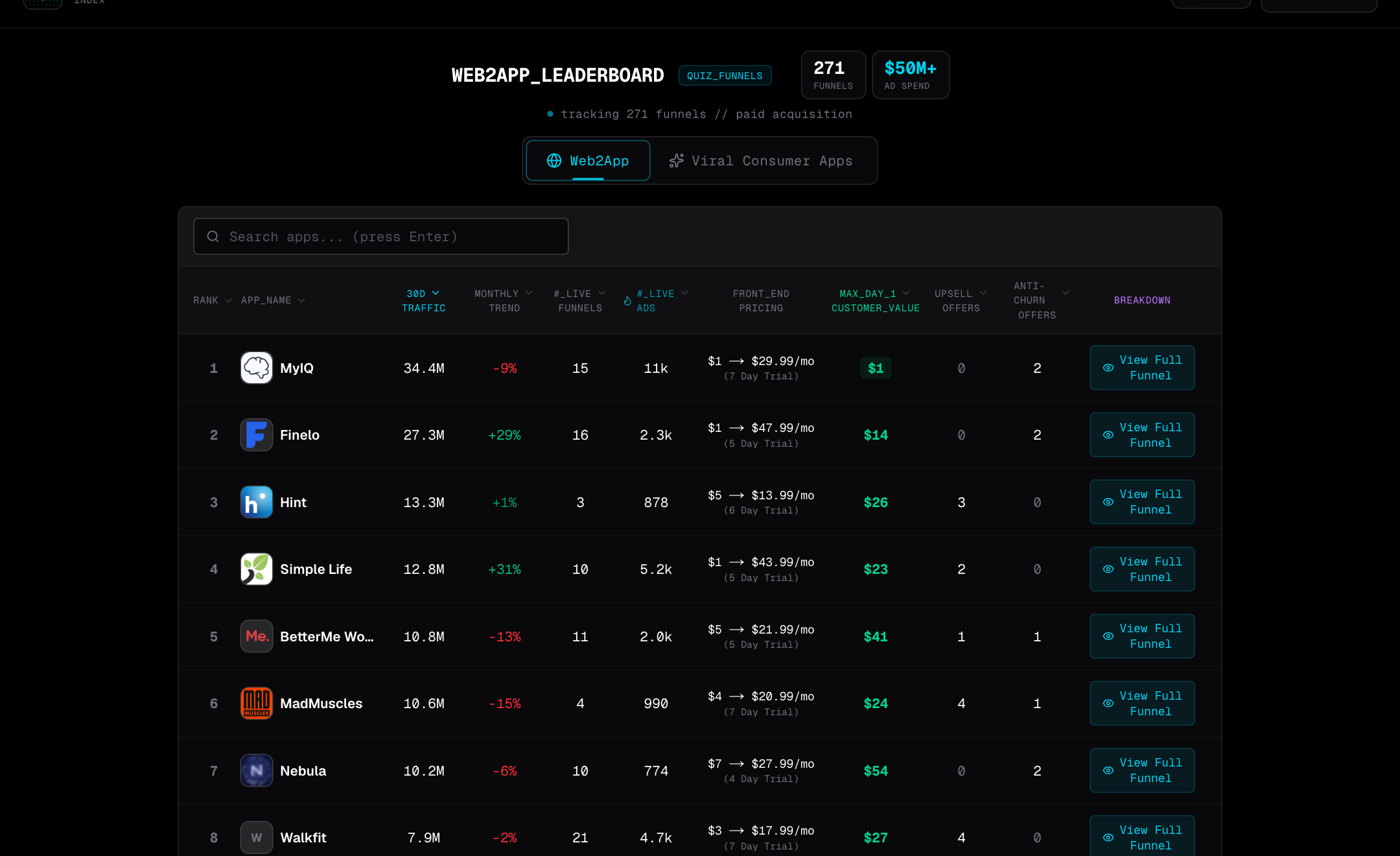
The highest-converting move in direct response, built in 1961
1970. A writer mails an aptitude test back to the Famous Writers School of Westport, Connecticut. The essay is written to be awful. On purpose. He signs it “Louella Mae Burns.”
“Congratulations! The enclosed Test unquestionably qualifies you for enrollment… only a fraction of our students receive higher grades.”
The school’s reply to a deliberately bad essay, as reported by Robert Byrne — retold by Mental Floss and The Atlantic’s own retrospective.
Now — most people read that letter and see a scandal.
I want you to see a conversion rate.
Because “Louella” was no fluke. Roughly 90% of every person who mailed that test in “passed.” Ninety percent.
Sit with that for a second. A free quiz takes cold strangers and tells nine out of ten of them you’ve got what it takes — before they ever see a price.
That is the highest-converting move in direct response. And the company behind the school — Famous Artists Schools Inc. — rode it from $7M to $48M a year by 1969.
Here’s why you care.
Every web2app quiz funnel we track ends in the exact spot that aptitude test did: you qualify. We’ve pulled apart 250+ consumer-app funnels now, and the rule never changes — no answer you give is ever allowed to fail you.
Your quiz funnel didn’t invent that. It inherited it.
It’s the Famous Writers engine, rebuilt for the phone — with one piece quietly swapped out (more on that in a minute), and fifty years of receipts attached that tell you which parts mint money… and which single part decides how much you can spend to grow.
So — no finger-wagging here.
We’re going to run the engine for you, one beat at a time, and hand you the audit at the end. Six levers.
Famous Writers pulled five of them like a machine… and skipped the sixth. That sixth lever is the whole ballgame. We’ll get there.
Let’s start the engine.
The EngineThe 6-beat engine (1961 build, 2026 deploy)
Quick background, because it matters.
The school launched in 1961. The front man was Bennett Cerf — he co-founded Random House and was famous enough to be on TV every week. Around him sat a “Guiding Faculty” of 15 brand-name writers: Rod Serling. Faith Baldwin. Red Smith.
But here’s the name that should stop you cold: John Caples.
Yes — that Caples. The man who all but invented split-testing ad copy. The fellow behind “They Laughed When I Sat Down at the Piano…” He put his name on a test that passed nine of every ten people who took it.
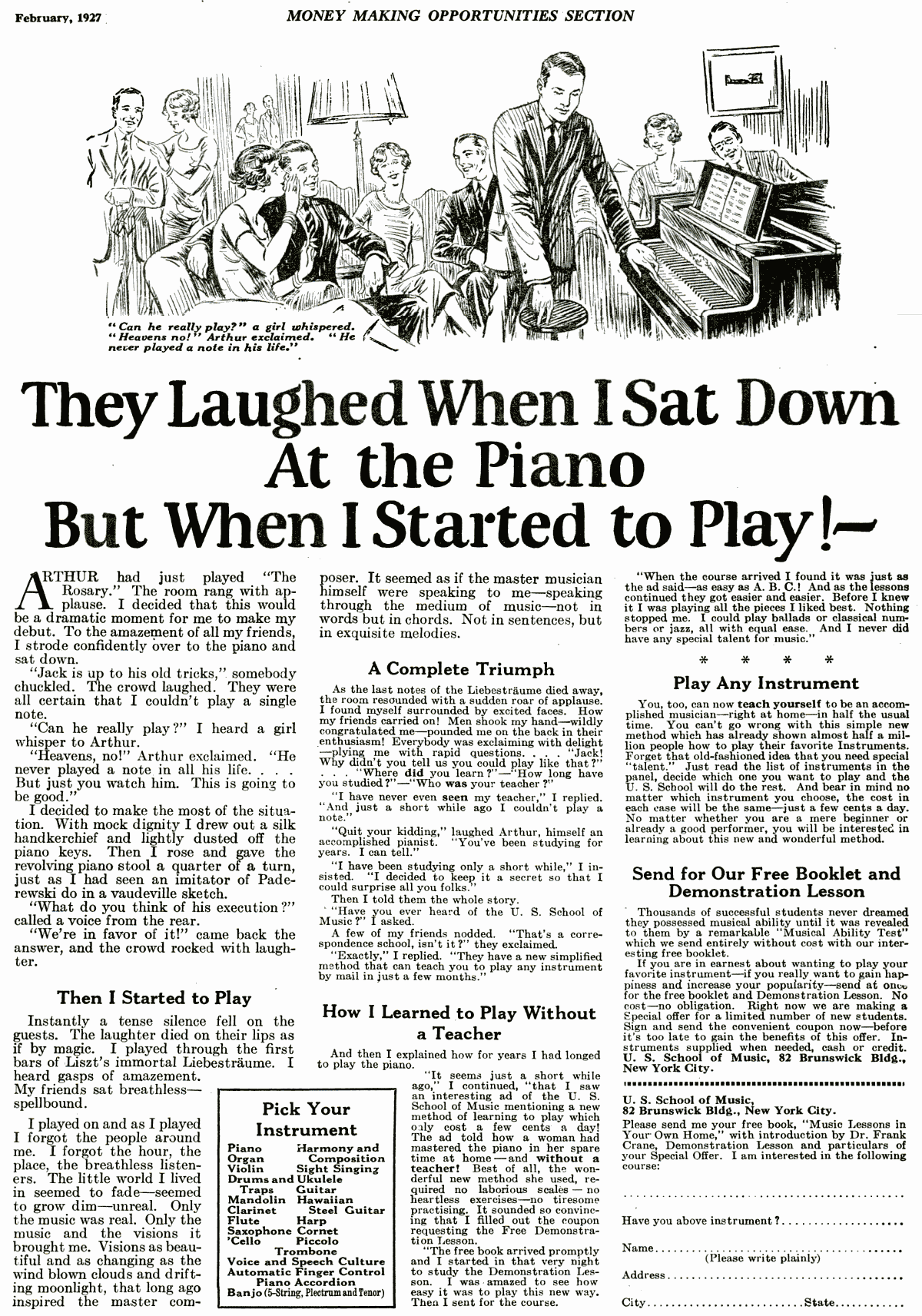
He knew exactly what he was building. By the end of this email, so will you.
And what they built was a six-beat machine for turning strangers into buyers.
I’m going to run it for you, beat by beat. On the left, the 1961 version. On the right, a screenshot of the same move running in a web2app funnel right now.
At the end of every beat: the one lever you can pull on your own funnel this week.
Beat 1 · Select, don’t surveyThe entry is an invitation you qualify for
The front door was never a form. It was a casting call:
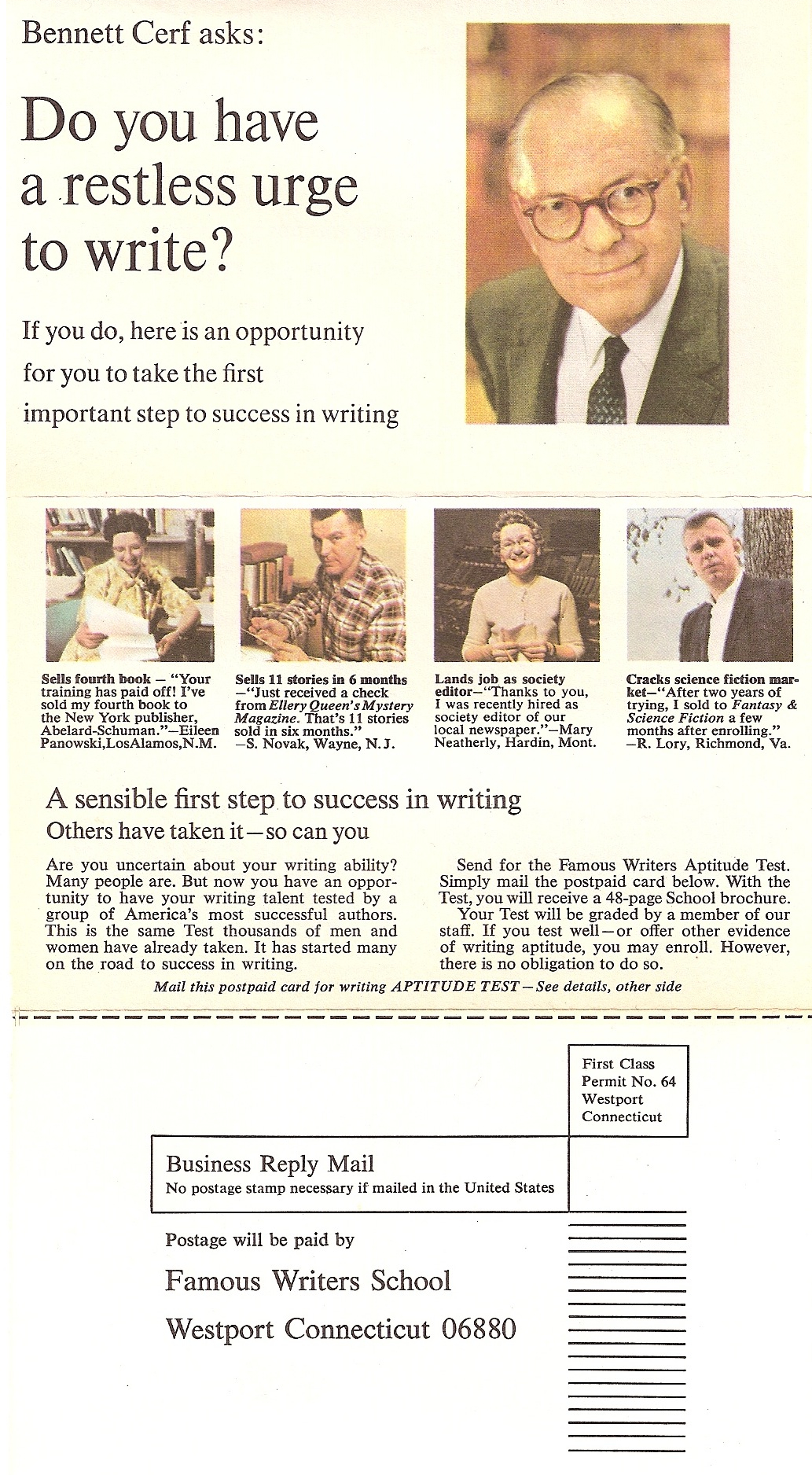
The modern funnel opens the identical way — no “Start” button, just a question you answer your way into. The first tap is the funnel.
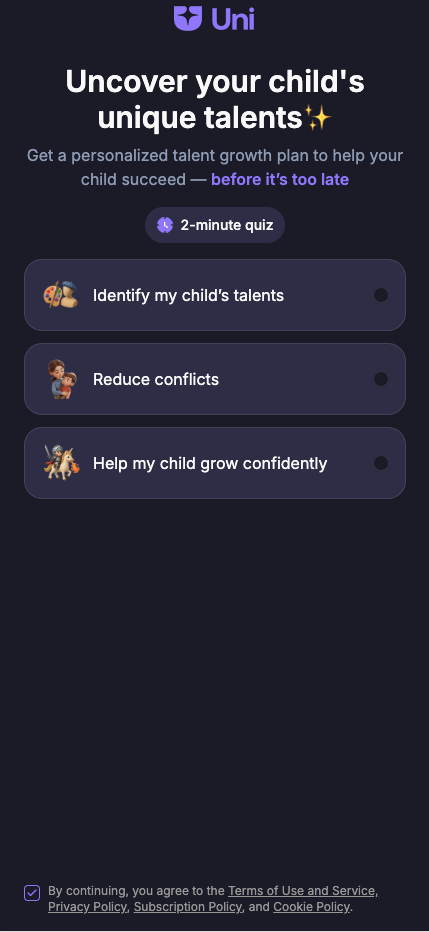

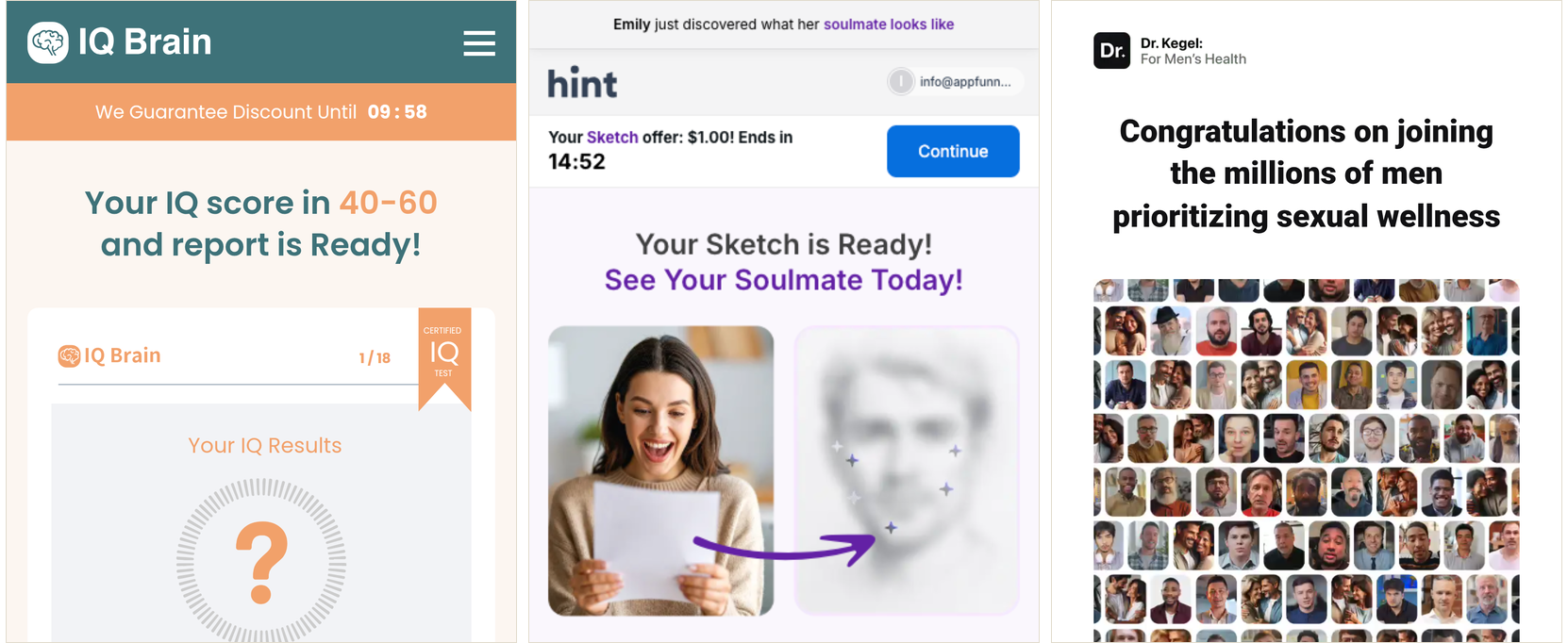
Kegel-Plan does it in one line — “Get Your Personal Kegel Plan” with the age question inline on the landing. Across the 33 funnels we read this way, the answer-as-first-click landing is the modal design: 18 of 33.
Make your entry a question, not a “Start” button.
That first tap is your highest-value routing variable: we’ve clocked the same one-week tier sold at $4.99 or $10.50 depending on which persona picks it. A Start button surveys; a first question qualifies — and prices — the buyer for free.
The test that can’t leak a sale
Louella Mae Burns — the deliberately terrible essay — “unquestionably qualified.” So did ~90% of applicants. No answer was allowed to lose the customer. The modern engine ships that as a rule, in writing:
“Whatever you answered, you’re a good candidate — no answer path is allowed to disqualify the purchase.”
CAI pattern dossier (coding-body.md, ANSWER-AFFIRMATION), June 2026. Dedicated affirmation interstitials: 6 of the 19 funnels sampled.
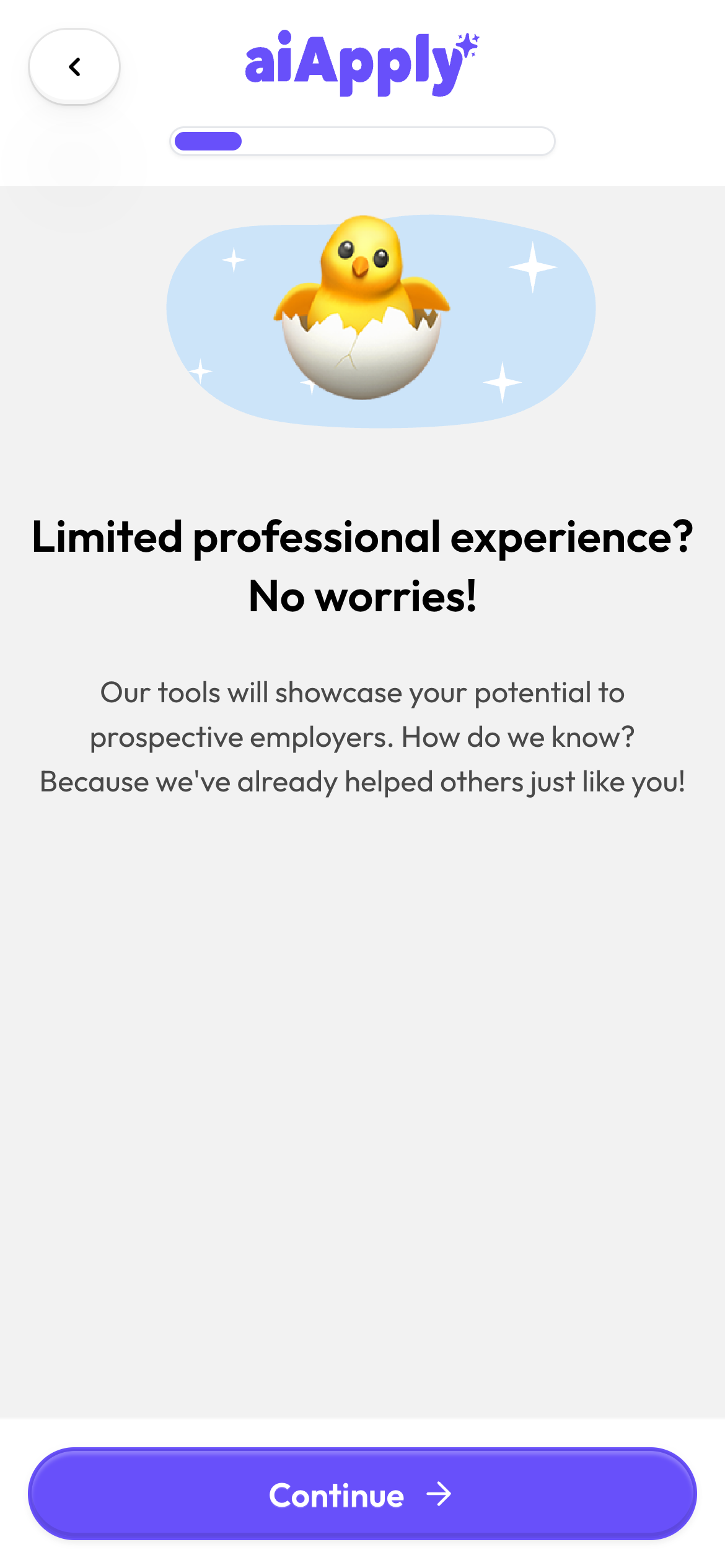
Find the one answer in your quiz that should lose the sale — and catch it.
aiApply hits “limited experience?” with “No worries!” the instant it appears. Reframe the disqualifier instead of honoring it, and your funnel branches like a screener while converting like a yes-man. (Beat 6 prices that choice.)
Make the “yes” feel computed and earned
The Burns reply wasn’t just a yes. It was a flattering, earned-sounding, computed yes: “only a fraction of our students receive higher grades.” The verdict felt scored. The modern engine spends real production budget making the verdict feel computed — because that’s where the price gets set.
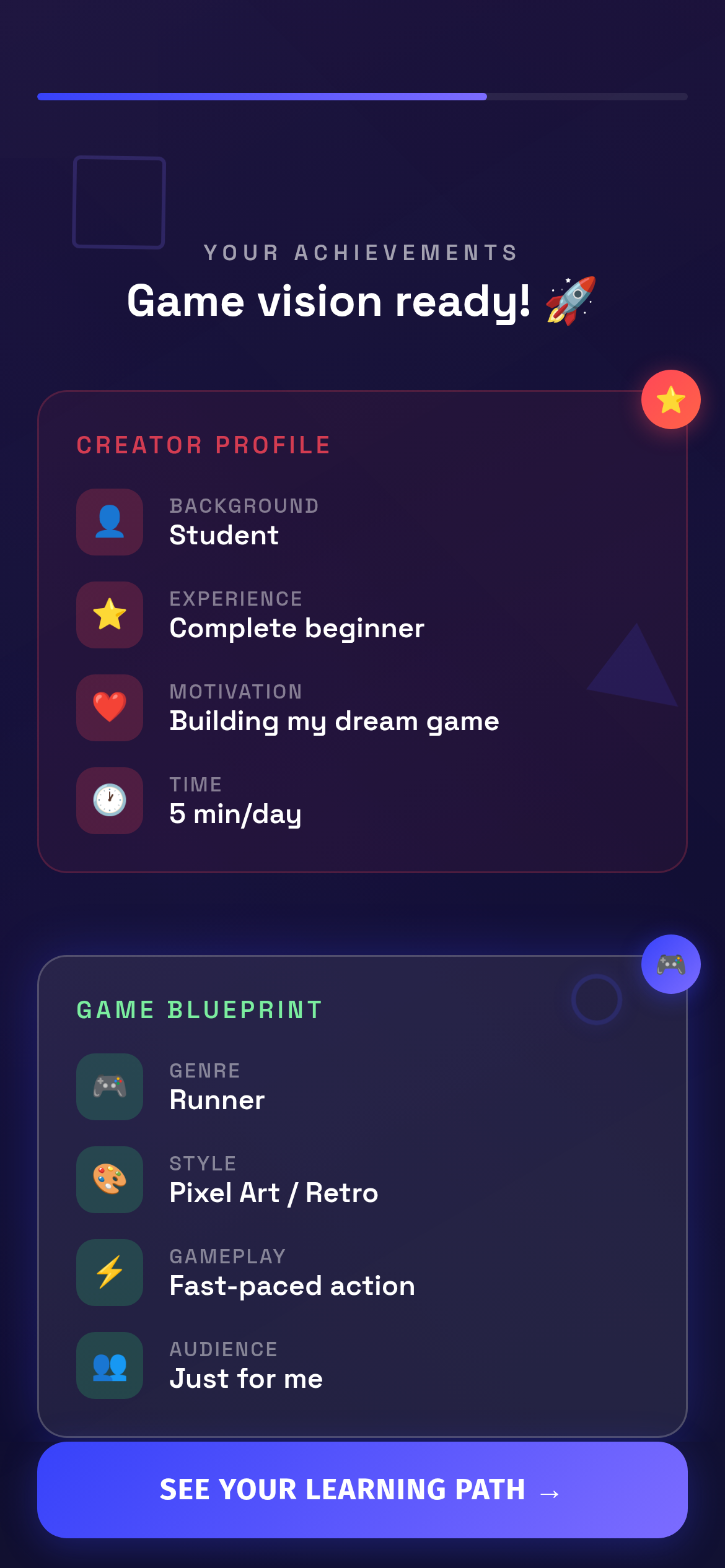
Kegel-Plan goes presumptive — “Congratulations on joining the millions of men…” before you’ve paid a cent. The IQ funnels render the verdict as a score that’s “Ready!” The point is always the same: make the output feel earned, personal, and calculated.
Spend your best copy on the verdict screen, not the feature grid.
A result the buyer believes was computed for them sells at a multiple — our dossier ties the answer-echo card straight to $20–$40/mo plan pricing over commodity rates. The verdict is where the price gets set.
Rent the credibility before the price shows
Famous Writers rented the most trusted literary names in America to vouch for a verdict none of them ever read:
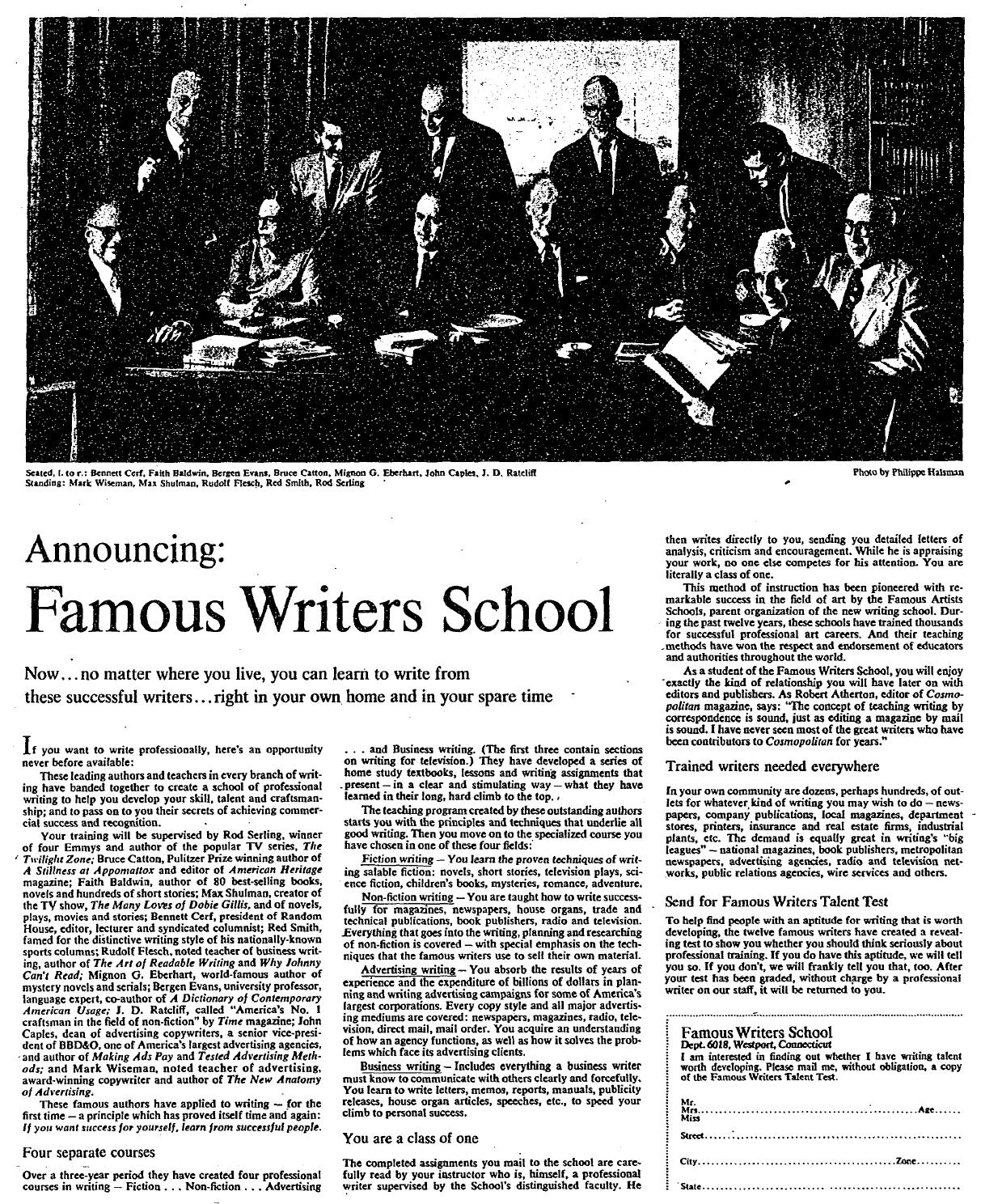
Today the borrowed authority is an algorithm and a citation. The loading screen is the evaluator:
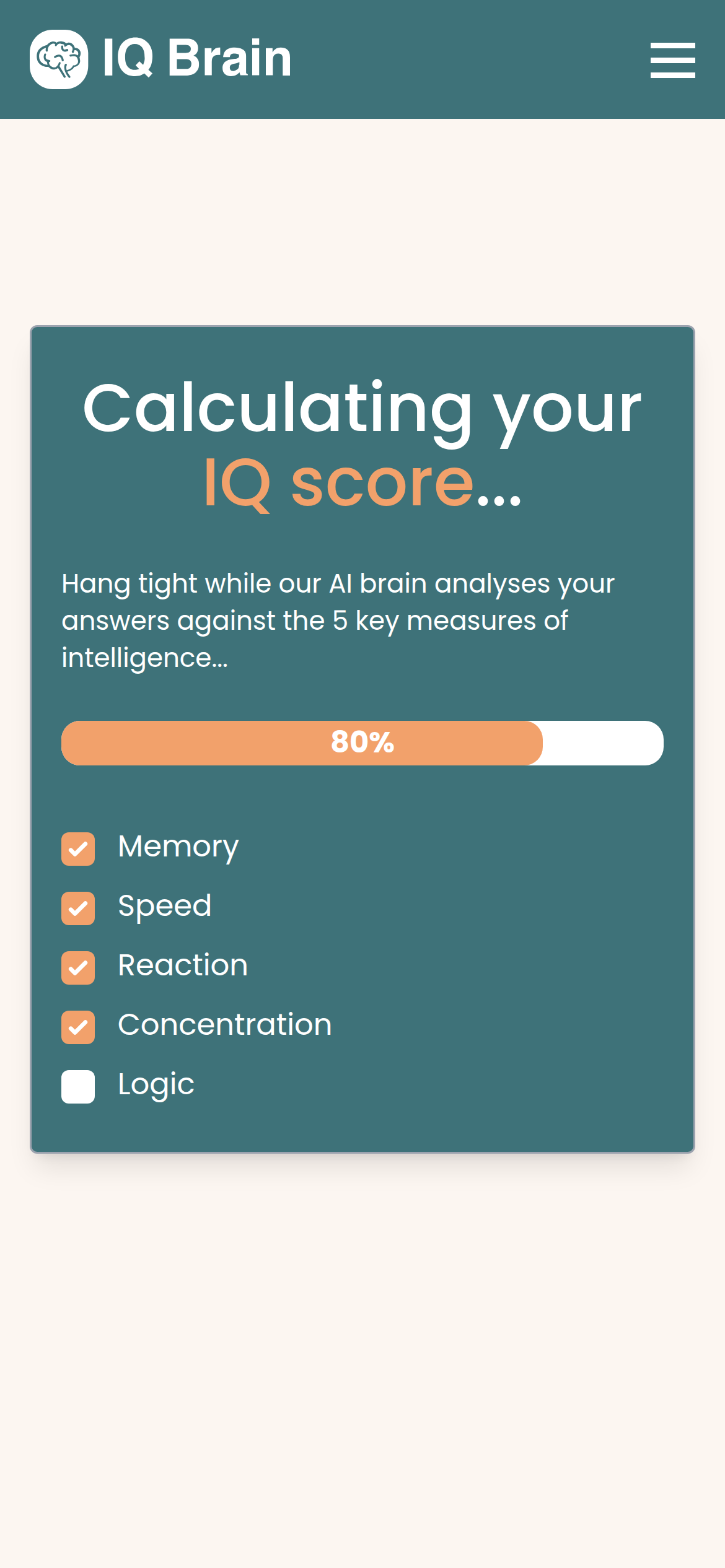
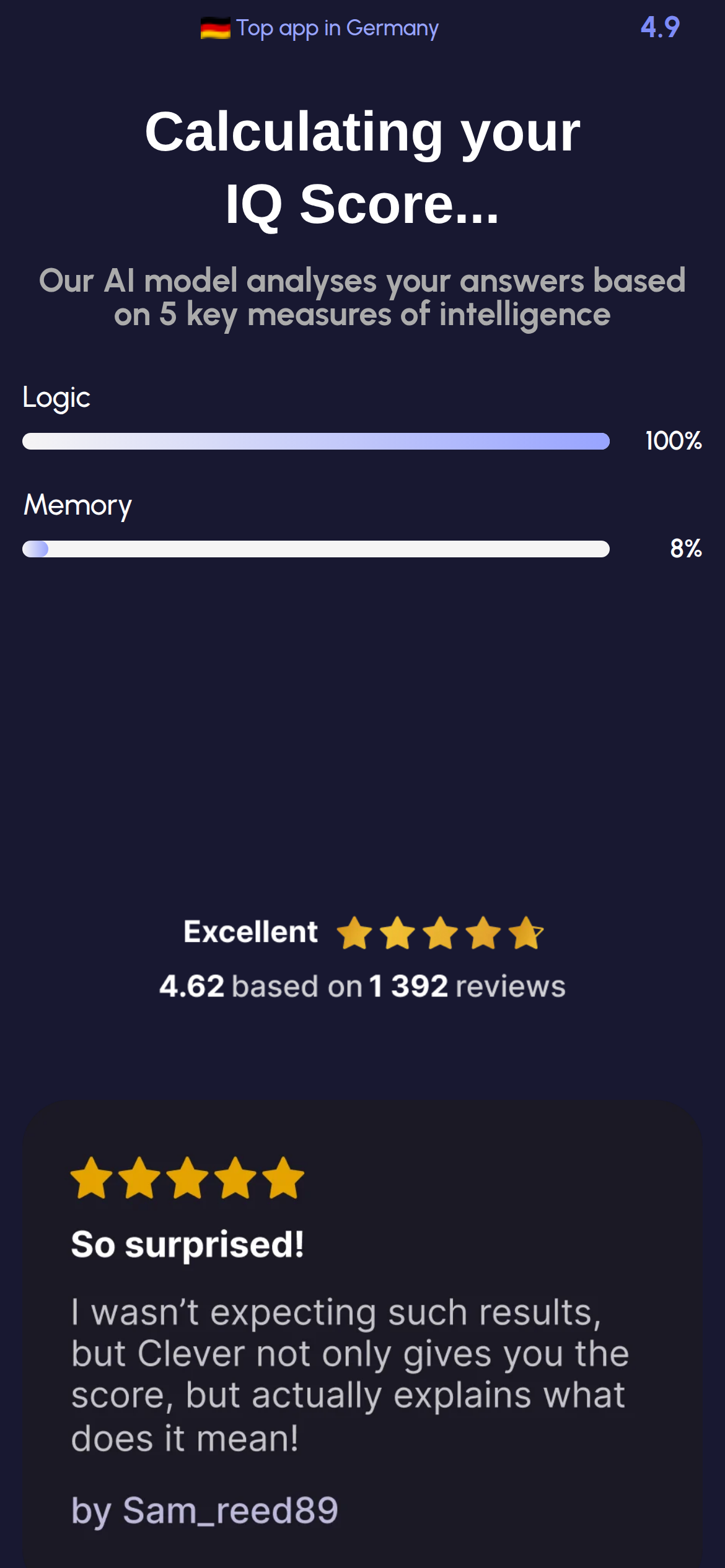
Borrow a name before you show a number.
Cerf rented famous faculty; you rent an “AI analysis,” a Trustpilot chip, a press strip. It doesn’t have to be your authority — it has to land in the 30 seconds before the verdict, while willingness-to-pay is still forming.
The paywall only collects — the verdict already sold
Here’s the move most operators miss. At Famous Writers, the grade was the product. Passing was the pitch. The $785 course ($900 on installments — roughly 15x a university correspondence course, near $5,800 in 2014 dollars) came after. The close was the verdict; the cash register just collected. Read the postcard again: “Your Test will be graded… If you test well, you may enroll.” The whole sale happens at “you qualify.”
Now watch how the modern engine names its buy button. Never “Buy.” Always the verdict:
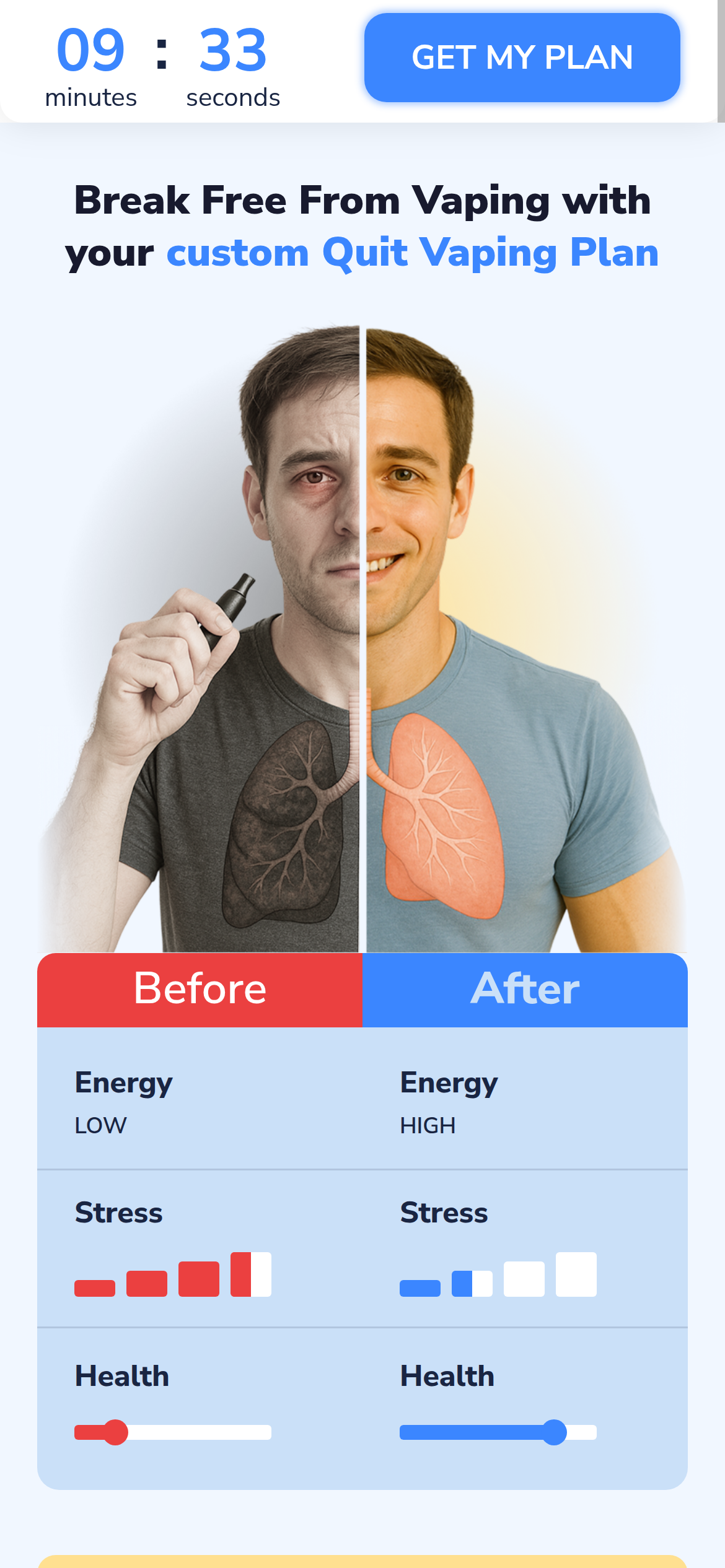
Move your persuasion budget to the verdict; let the paywall just collect.
26 of 26 funnels we read never say “Buy” — they say “Get My Plan.” The sale closed three screens earlier at “your plan is ready.” Pouring creative into the price screen is decorating the cash register.
Honor the verdict, or pay it back — the lever that sets your CAC ceiling
Five beats in, you have the most efficient customer-acquisition machine ever built: cold traffic self-selects, nobody fails, the verdict feels earned, the authority is rented, the close lands before the price. Famous Writers ran all five — flawlessly. It built a $48M company on them.
Then it skipped the sixth: honor the belief you manufactured, or pay it back. The school sold 65,000 students a $785–$900 verdict it could not deliver on — 800 commission salesmen against 55 instructors, roughly 10,000 assignments per grader per year. Cerf, on the record about the famous faculty: “If anyone thinks we’ve got time to look at the aptitude tests that come in, they’re out of their mind.” The belief was real revenue. The delivery was zero. That gap is the whole bill — and it came due the day one journalist graded the grader.
The journalist was Jessica Mitford. Her trigger: a 72-year-old widow, $200 down, refund refused — the school’s line, “You are involved in a legal and binding contract.” She published “Let Us Now Appraise Famous Writers” in The Atlantic, July 1970 — the magazine’s biggest newsstand seller to that date. Cerf handed her the obituary quotes himself: the business was “a very hard sales pitch, an appeal to the gullible,” and “I know nothing about the business and selling end and I care less.” What the back half couldn’t honor, the refunds and regulators repriced:
Then the queue formed the other way: an FTC inquiry, state attorneys general (Iowa among them), enrollment collapse. Trading suspended May 1971. Cerf died that August. Bankruptcy reorganization in 1972 — about 24 months, article to reorganization.
Famous Writers didn’t die because the front five beats were wrong. They were perfect — that’s the proof they print money. It died because the back half couldn’t honor the belief the front half sold. That gap — promise minus delivery — is your refund-and-chargeback rate, and refund-adjusted LTV is the ceiling on what you can pay to acquire a customer. Honor the verdict and your refunds stay low, your LTV stays high, and you can outbid the operator who can’t on every click of traffic. Skip beat 6 and you’re Westport, 1970: a beautiful front end with a CAC ceiling of zero.
So why hasn’t the 2026 version collapsed the same way? Because the web2app quiz funnel made two adaptations to the engine — and they’re the whole insight.
That second adaptation is exactly where beat 6 lives now. The belief you manufacture at the verdict is borrowed revenue — you repay it at delivery, every renewal cycle, or you refund it. Coursiv even hedges its guarantee to the delivery side: money back “if you can demonstrate that you followed the plan.” And the regulators didn’t retire after 1970 — the same FTC that chased Famous Writers has, in the modern era, moved squarely onto subscription auto-renewal and “negative-option” disclosure. Treat the back half as the thing that sets your ceiling, and that’s a tailwind, not a threat.
The FrameworkThe Qualified-Buyer Loop
Six beats, six levers. Run them on your own funnel this afternoon — one question per beat. Beats 1–5 find conversion you’re leaving on the table. Beat 6 sets the ceiling on what you can spend to get it.
Beats 1–5 are where Famous Writers was flawless and where your next conversion point hides. Beat 6 is where it died — and where your media budget gets its real number. Run the loop, fix the weakest beat first, and you’ve found money in both directions: more conversions on the front, a higher ceiling on the back.
Your quiz’s verdict is the highest-converting sentence in your funnel — and how well your product honors it is your CAC ceiling.
- The front five beats print money. Selecting (not surveying) 90% of cold traffic into the buyer persona before any price is the highest-converting move in direct response — it built a $48M company.
- The verdict is where you earn premium price. A computed-feeling result supports $20–$40/mo plans; a generic one sells at commodity rates.
- The close is the verdict, not the price. “Get My Plan” in 26 of 26 paywalls we read — zero said “Buy.” Move your persuasion budget upstream.
- Beat 6 sets the ceiling. Famous Writers ran 5 of 6 and skipped “honor the verdict” — reorganization in ~24 months. Refund-adjusted LTV = how much you can outbid for traffic.
- Run the Qualified-Buyer Loop: select → find the leak → engineer the verdict → borrow authority → close on the verdict → honor it.
Crumbs from the archive
refund-adjusted LTV → your CAC ceiling → how high you can bid
Tighten the verdict-to-delivery gap (beat 6) and that ceiling rises — so you outspend every competitor bidding on the same traffic.
Which beat is your funnel weakest on? Hit reply with the number — we’ll pull a matching example from the index and break the fix down in a future issue.
Find the leak on the front five beats. Raise the ceiling on the sixth. That’s where the money is.
Was this post 🥛 fire / 🫗 mid / 🧀 expired? Tell us — it changes what we dig into next.
The latest web2app insights, at your fingertips
THE AD (it’s ours, it’s short)
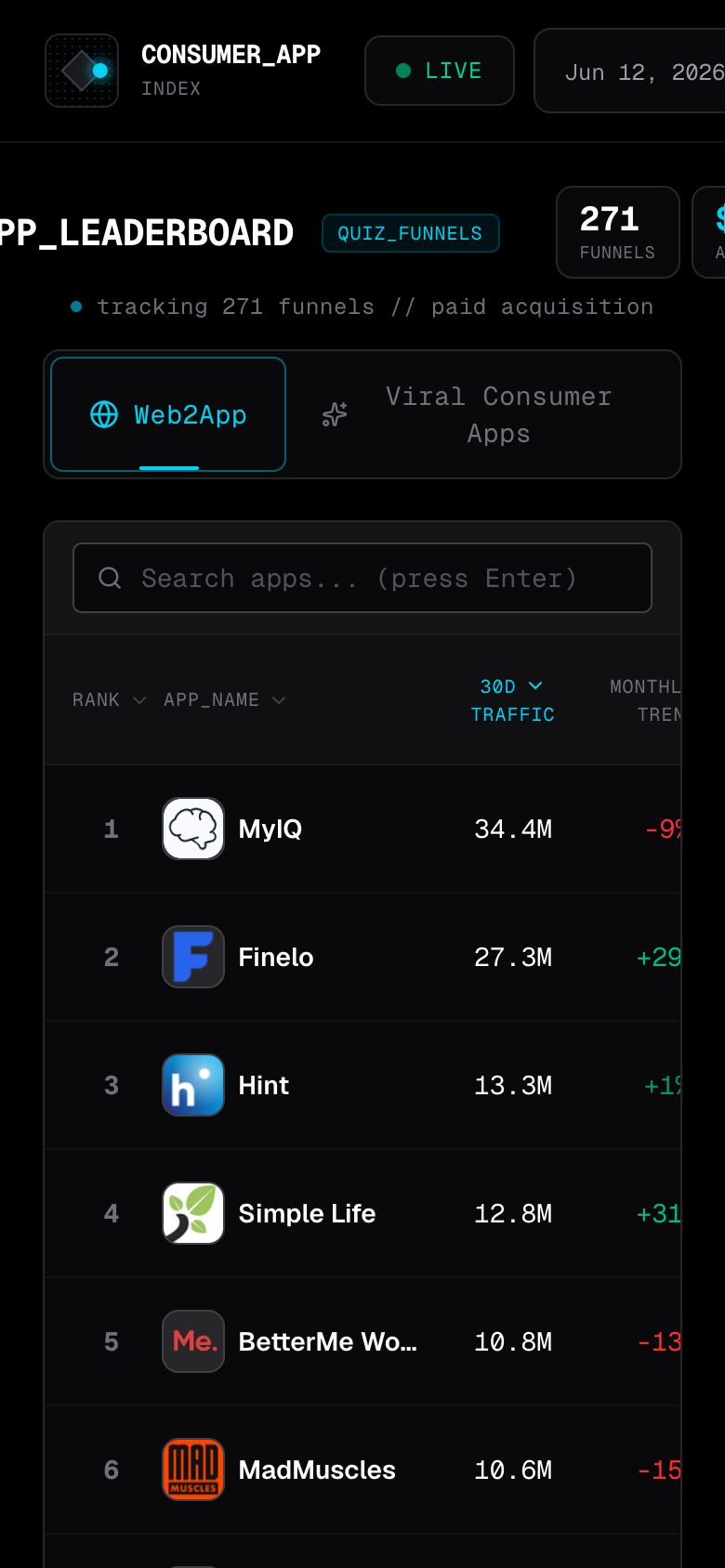
Every modern screenshot above came out of one terminal: 250+ web2app apps — every Meta and YouTube ad library, every paywall capture, every cancel flow we could physically click through. We take the quizzes, answer badly on purpose, and screenshot what happens so you don’t have to.
One member, verbatim: “this shouldn’t be public.”
The dare: if you don’t find one ad, one quiz flow, or one retention offer that makes you more money — tell us, full refund.
(Members: skip this box. You are this box.)
Already a member? Go here to see the latest inside the app →
