 CONSUMER_APP_INDEX
Blog · June 17, 2026 · ~8 min read
CONSUMER_APP_INDEX
Blog · June 17, 2026 · ~8 min read
Squeeze pages ask for the email first. Quiz funnels ask at screen 70. Both are right.
We grabbed 19 example top Web2App quiz funnels displaying the the exact inverse of the opt-in doctrine a generation of marketers learned. See the four psych principles at play - and how to leverage them for your own funnels - inside this newsletter...
The Receipt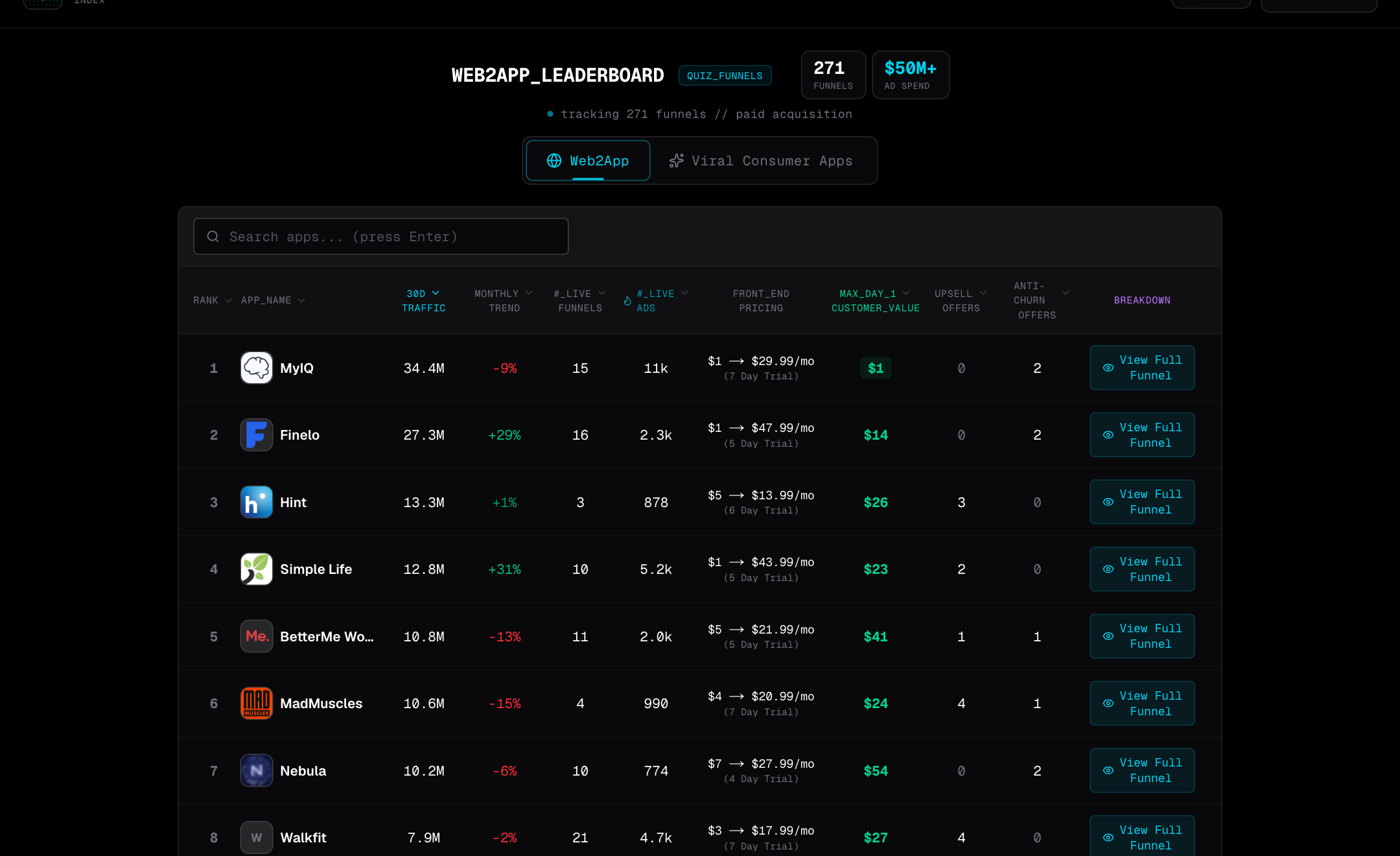
A funnel that asks 70 questions before it asks who you are
Brain AI runs a 100-screen IQ funnel. Timed logic matrices, 20-item batteries, a countdown clock.
The email box appears at screen 70.
Not a typo. Seventy screens of work before the funnel asks for the one field every marketer is taught to grab first.
Here's the part that made us write this piece: Brain AI is the early bird. We measured the email gate's position in every captured funnel where labels let us locate it — 19 funnels. The median gate sits at 95% of quiz depth. 16 of 19 sit at 83% or deeper. Three ask on the literal last screen.
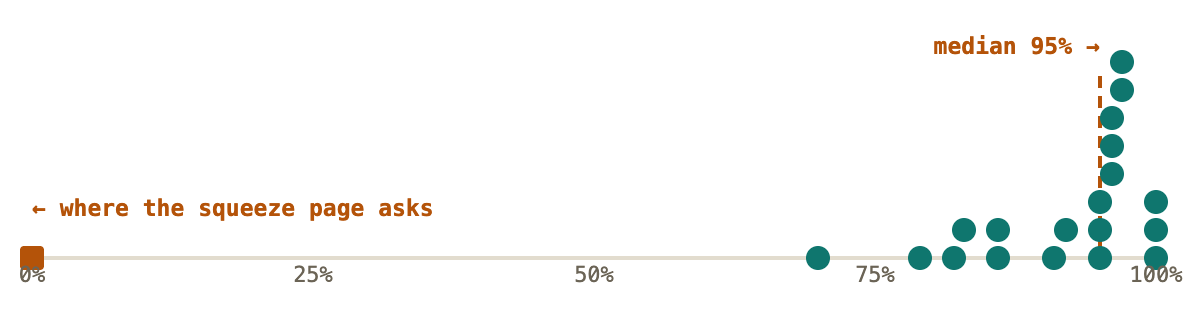
If you learned marketing between 2004 and 2015, that chart reads like heresy.
The DoctrineTwenty years of “email first”
The squeeze page was the law. One screen. A headline, a promise, a box, a button. ClickFunnels still defines it as “a short-form lead generation landing page that is designed to get the visitor's email address” — a headline, an opt-in form, a CTA button, very little else. Here's the canon, preserved in the swipe-file archives:


The doctrine's logic was clean. You paid for the click. The page holds exactly one asset — a promise — and a promise will never be worth more than it is on arrival. Every second between landing and opt-in is leak. So ask now, and do the selling later, by email.
Did you catch the assumption baked in there?
Ask early, because waiting can't make your offer more attractive.
That assumption is what quiz funnels broke. Not the psychology — the assumption.
The MechanismEvery email gate is a trade
The visitor hands over an address. They get something back.
Deiss's page trades the address for a promise — a free report, someday, in your inbox. A promise peaks at first sight. Gate on arrival. Correct.
A quiz funnel trades the address for a result — your score, your plan, the thing 70 screens just “built.” A result gets more valuable with every screen of work the visitor puts in. So the gate slides to where the result's value peaks: one screen before the reveal. Also correct.
Same field. Same psychology. Different asset — so the ask moves to the other end of the funnel.
Four research findings do the value-building. None of them are new. All of them are on camera in our captures.
Principle 1 of 4Foot-in-the-door: the gate is the 71st yes
In 1966, Freedman and Fraser asked California homeowners to put a big, ugly “Drive Carefully” sign on their lawns. 17% said yes. But homeowners who had first agreed to a tiny 3-inch sticker two weeks earlier? 76% said yes to the same ugly sign (Journal of Personality and Social Psychology, 4(2), 195–202). Small yes first, big yes later — compliance roughly quadrupled.
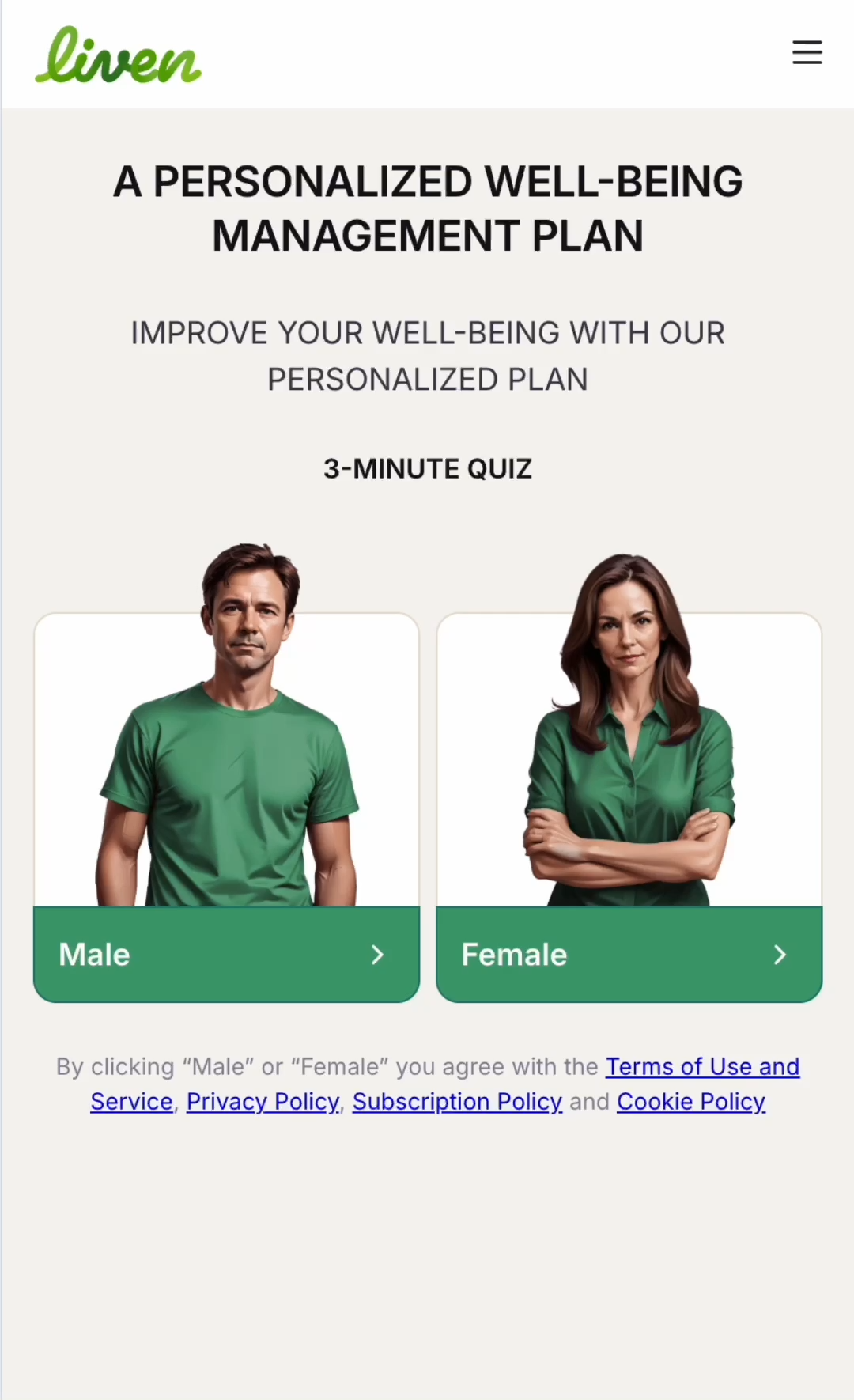
Quiz funnels run this finding at industrial scale, starting on screen one. In 18 of 33 captured entry screens there is no “Start” button at all — the first question's answer buttons are the only way in. You don't decide to take a quiz. You just answer.
Then the yeses stack. An age. A goal. A struggle. An “Always” on a 1-to-5 scale. By the time the email box appears at 95% depth, you've granted 40, 50, 70 micro-requests to a funnel you have never once refused.
The email is request number 71. Cialdini's name for the engine is commitment and consistency: we strain to act in line with what we've already done. Refusing at screen 66 means deciding the previous 65 taps were a mistake.
A squeeze page can't use any of this. There's nothing to say yes to before the email. So it doesn't try — it asks while the ad's motivation is still warm. Same finding, opposite implementation.
Principle 2 of 4Sunk cost: the gate that bills you for your own time
Arkes and Blumer, 1985 (Organizational Behavior and Human Decision Processes, 35, 124–140): theatergoers randomly sold full-price ($15) season tickets attended roughly 4.1 plays in the half-season; discounted buyers attended about 3.3. Identical seats, identical plays. The more you've sunk, the harder you cling.
Now look at what Testora prints on its email gate:
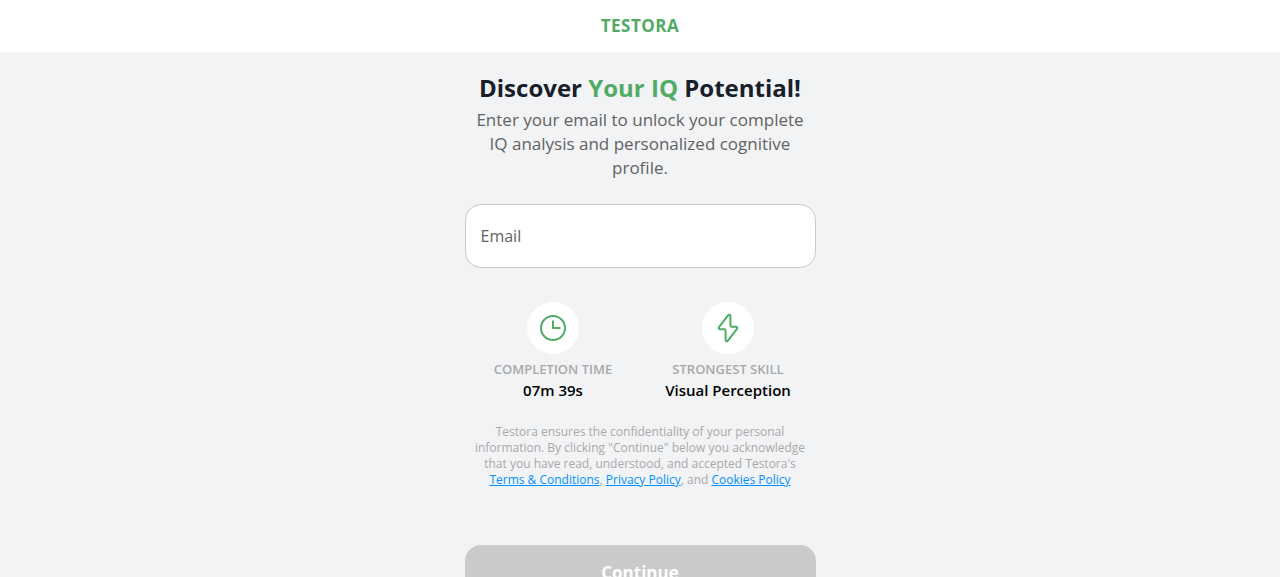
That's not decoration. That's a receipt. You already spent seven minutes and 39 seconds — going to throw that away over an email address?
And the cost was priced low at the door on purpose. Liven's entry promised a “3-MINUTE QUIZ.” The minute-pill is standard kit across our captures — and it always quantifies the quiz, never the full flow. Hint's timestamped capture shows a quiz portion of roughly 2 minutes inside a session that runs 12:29 once the paywall and upsells load. The pill quantifies the bait, never the trap.
One honest hedge: in the lab, sunk cost is a fallacy — the money's gone either way. In a funnel, it's an asset somebody manufactures on purpose, three promised minutes at a time.
Principle 3 of 4The IKEA effect: you don't abandon a thing you built
Norton, Mochon and Ariely, 2012 (Journal of Consumer Psychology, 22(3), 453–460): people who assembled a plain IKEA box themselves were willing to pay 63% more for it than buyers of an identical pre-built box. Labor leads to love — and notably, the effect collapses when the build fails or stays unfinished.
So the funnel makes sure you watch yourself building. Mid-quiz, your answers get echoed back as an artifact with your fingerprints on it:
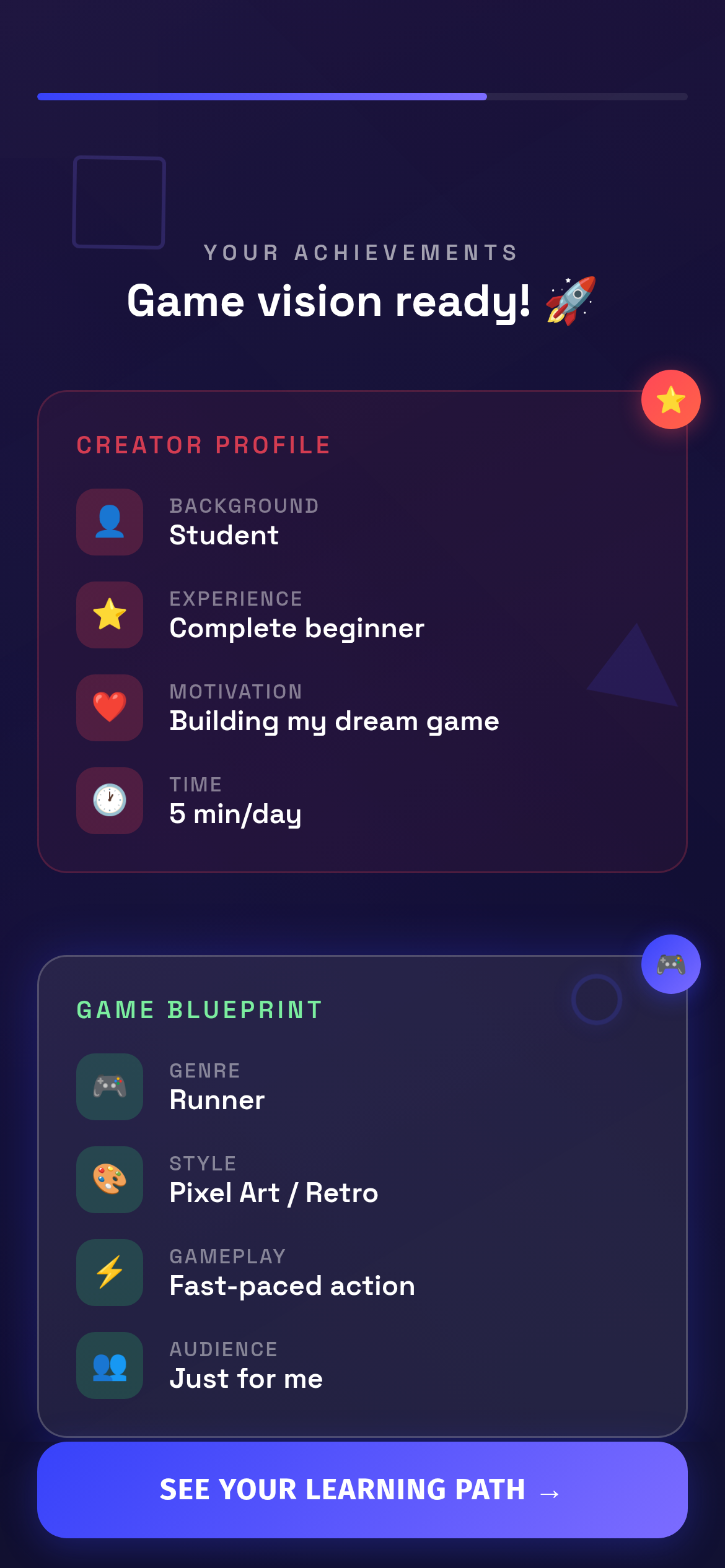
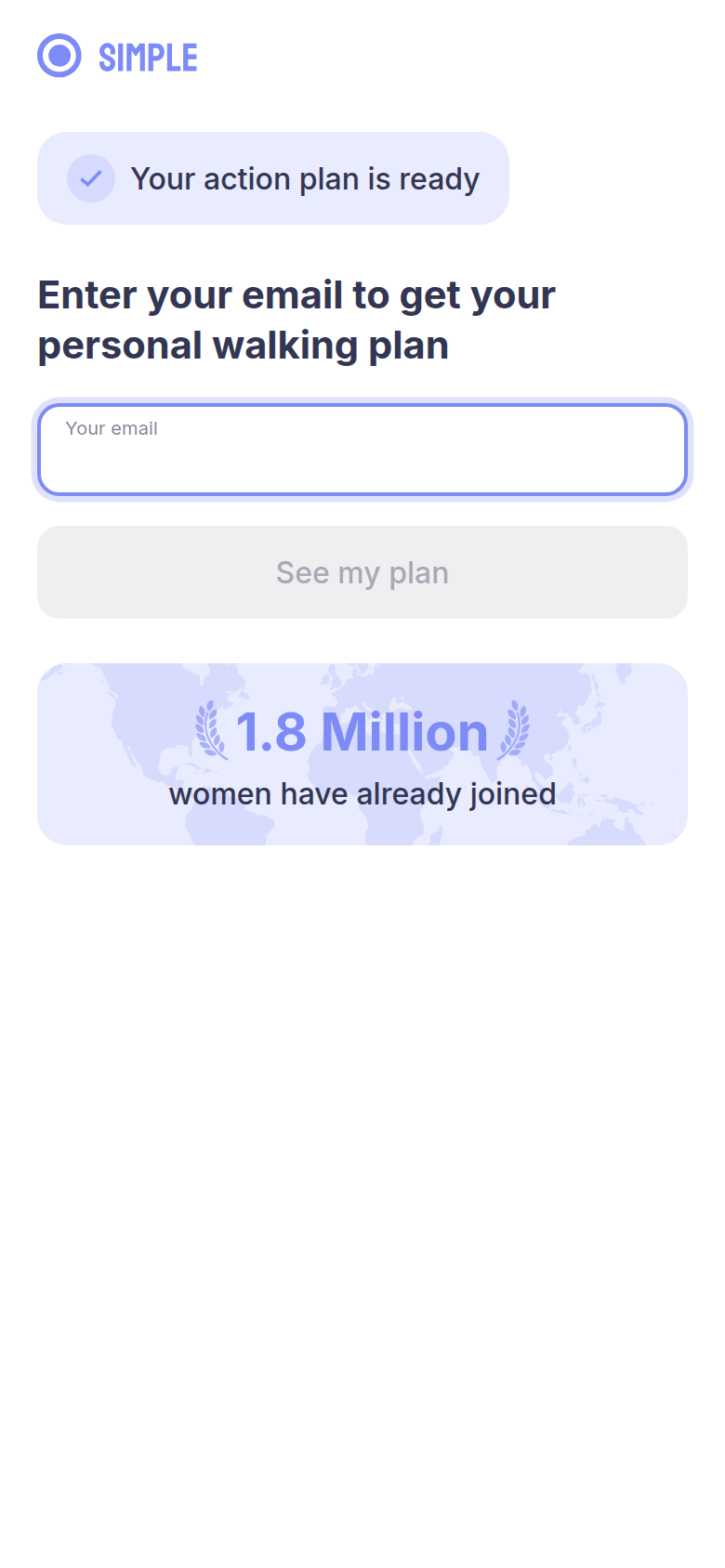
Read the gate copy again. Nobody in this corpus asks you to “subscribe to our newsletter.” The ask is always framed as logistics: where should we send the thing you made? Declining doesn't feel like skipping marketing. It feels like abandoning your own half-built furniture in the store.
The squeeze page has no build to leverage — the visitor has made nothing yet. One more reason its only rational move is to ask immediately.
Principle 4 of 4Zeigarnik: the open loop does the closing
Berlin, 1927. Bluma Zeigarnik noticed café waiters held perfect memory of unpaid orders — and forgot them the moment the bill was settled. Her experiments (Psychologische Forschung, 9, 1–85) found interrupted tasks were recalled roughly twice as well as completed ones. Unfinished business occupies the mind until it closes.
Here's the placement detail proving the funnels know this: in 4 of 4 captured funnels that have both a loading sequence and an email gate, the loading comes first. The “result” is computed — theatrically, at length — before anyone asks where to send it.
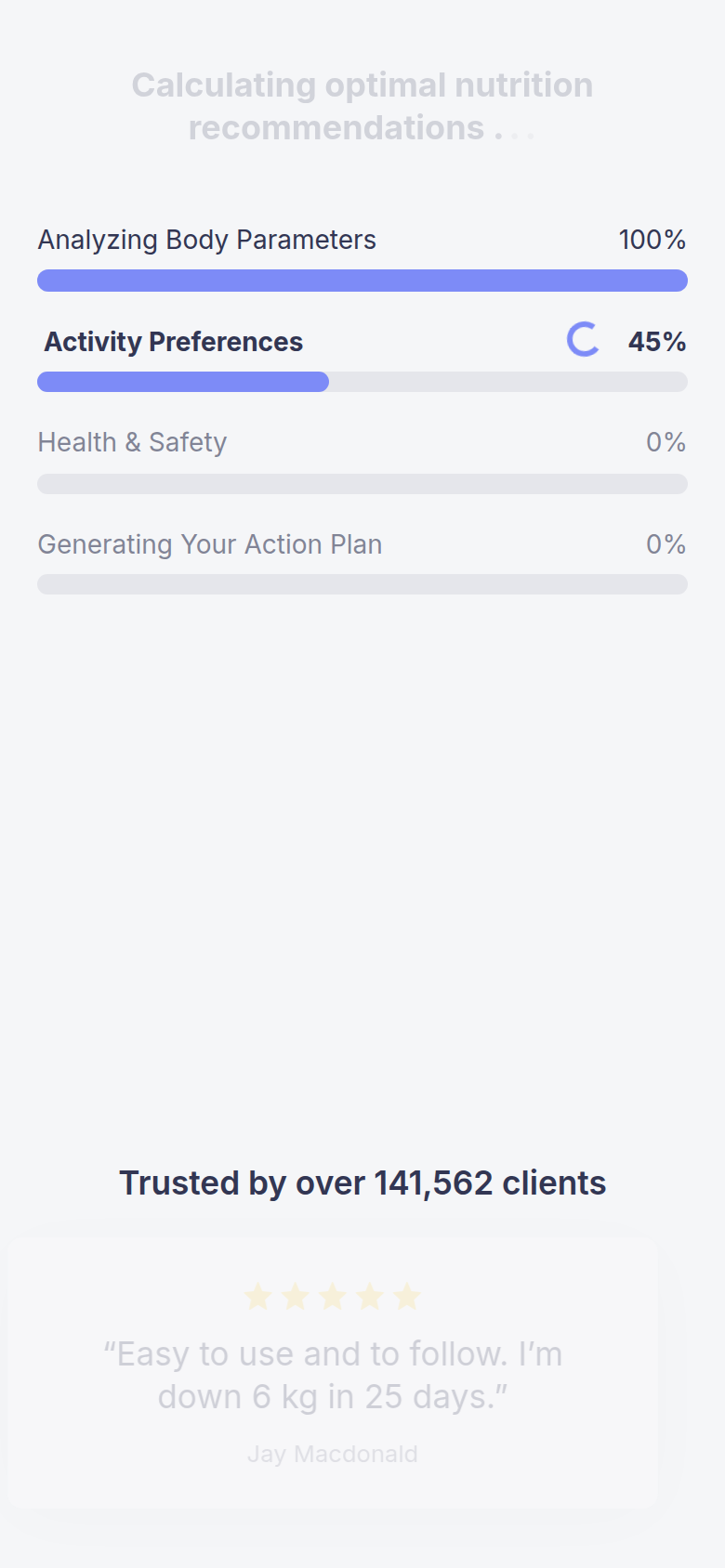
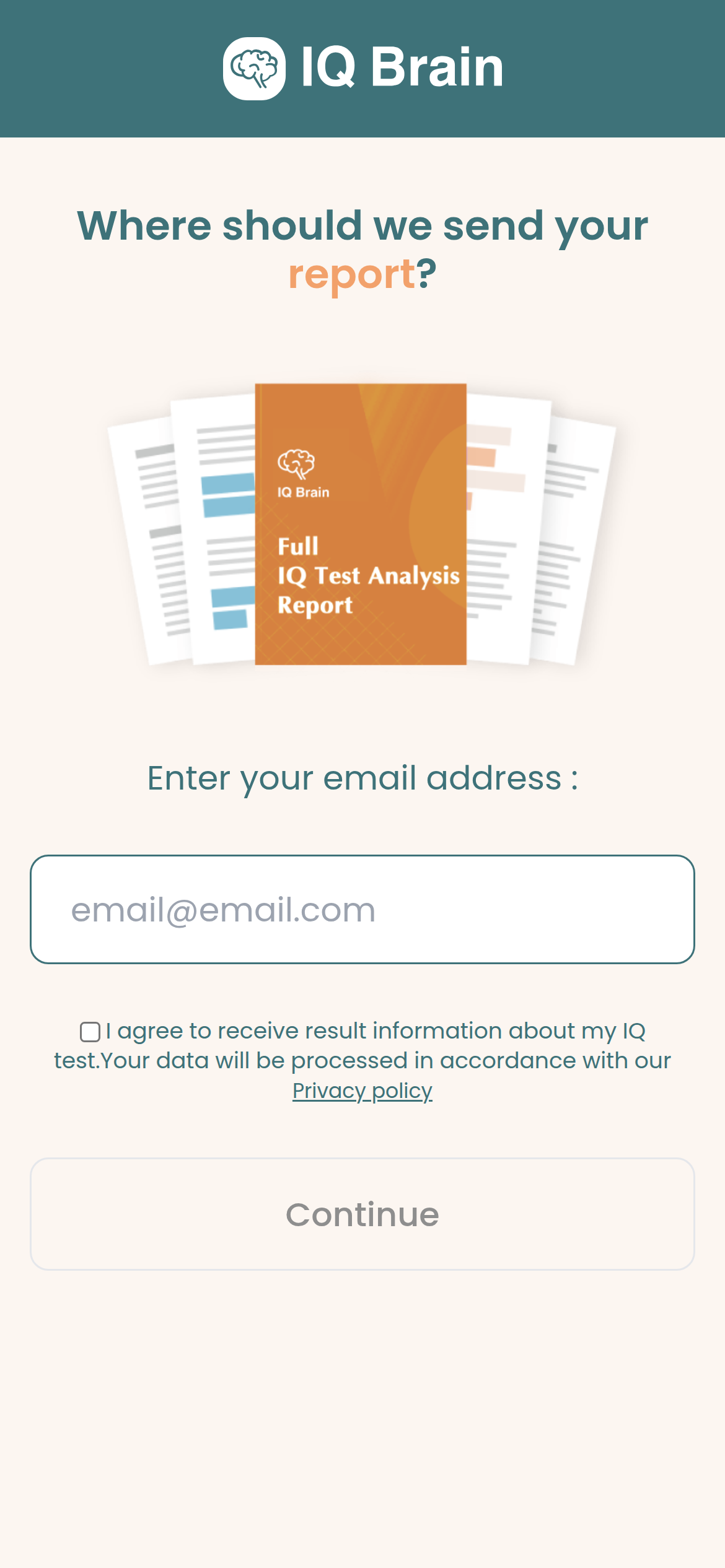
That sequencing is the whole game. Your score exists. Your plan is ready. The loop sits open at maximum tension, and the email box is the only door out. Zeigarnik's waiters couldn't forget the unpaid table; you can't close the tab on an uncollected IQ score.
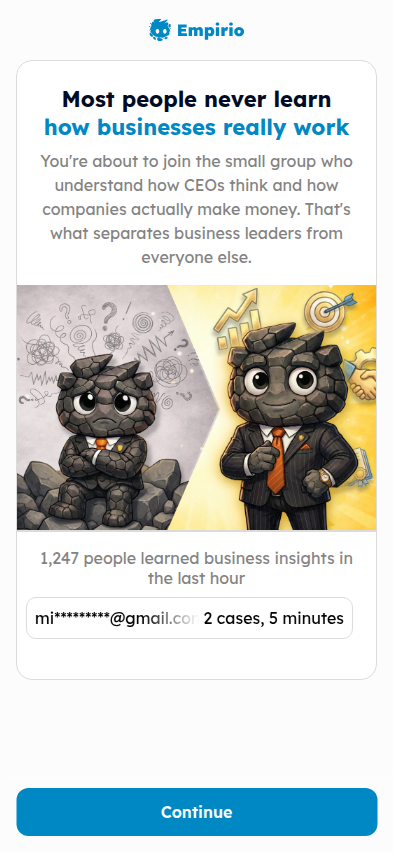
And the gate gets a victory lap. Empirio asks at screen 39 of 43 (“Your Business Profile is ready — enter your email to save your profile”), then, at screen 42, shows you everyone who just complied:
What the address is actually for
Here's where the two playbooks split for good. Deiss and DeAngelo wanted the email to start a relationship — the inbox was the funnel. The sale lived weeks of emails away.
The quiz funnel's paywall is 60 seconds past the gate. It doesn't need a relationship. It needs checkout insurance. Our captures show exactly what the address gets used for when you bounce off the price: Hint fires 93%-off recovery codes (SOULMATEHINT93, ASTROMAP93); Nebula's retention screen serves a “Secret Discount” trial at $1 total today. The gate converts a lost checkout into a discounted second chance.
And operators defend it accordingly. Copymind hard-gates with an email OTP — a code sent to a real inbox — which killed our capture walker outright. Courshark's gate looped one of our walkers into 70+ identical frames. Five of 91 walker runs died at input screens. These funnels would rather break a session than accept a fake address. (Jane.doe2026 has been bounced from finer establishments.)
“Ok, but does anyone skip the in-quiz gate entirely?”
Yes — honest counter-example: the entire Hint family (7 captured funnels) and Coursiv's price variants show no in-quiz email screen at all. They collect the address at checkout, past the price decision. The gate isn't sacred; it's a dial. Brain AI turns it the other way — gating at 70% and then running 30 more screens, so even mid-quiz abandoners are already on the drip list before its $0.99 trial offer ever renders.
The squeeze-page email opens a relationship; the quiz-funnel email insures a checkout that's a minute away. Same form field, different job — which is why the same psychology puts it at opposite ends of the funnel. Copy a placement without knowing which job you're hiring the email for, and you inherit the worst of both.
Ok. Interesting. But where does my email ask go?
1. Name the trade. What does your gate hand back — a promise or a result? A promise peaks on arrival: gate early, squeeze-page style. A result compounds with every screen of work: gate one screen before the reveal.
2. Audit the build. Everything between arrival and ask must add value to the result — answers in, artifact out (profile cards, projections, loading theater). A screen that builds nothing is pure attrition. Worked example: a 30-question quiz gating at question 3 is paying quiz-length attrition for squeeze-page psychology — worst of both. Move the gate behind the loading screen, between teased result and price, and measure opt-in rate AND address quality.
3. Write the second shot first. If a paywall follows within a minute, the email's real job is recovery. Draft the win-back offer (Hint's is a 93%-off code) before you move the gate. A gate with no second shot is just friction with a form field.
A quiz funnel peaks one screen before the reveal.
The four principles, one line each
- 🚪 Foot-in-the-door (Freedman & Fraser, 1966 — 17% → 76%): seventy small yeses make the email the 71st. Exhibit: Liven's no-start-button entry.
- ⏱️ Sunk cost (Arkes & Blumer, 1985 — full-price ticket holders attend more): the gate itemizes your minutes. Exhibit: Testora's “07m 39s.”
- 🪑 IKEA effect (Norton, Mochon & Ariely, 2012 — +63% for self-built): the ask is delivery logistics for a thing you built. Exhibit: Sololearn's Creator Profile.
- 🔄 Zeigarnik (1927 — unfinished tasks recalled ~2x): compute the result first, gate the reveal. Exhibit: four loaders, then Simple's gate at 49/51.
- 📍 And the placement those four buy: median 95% of quiz depth across 19 measured funnels — vs. screen 1 in the squeeze-page canon. Both at peak. Both right.
Homework. Open your own funnel. Divide the screen number of your email ask by your total screen count. The index's median is 0.95; the squeeze-page canon is ~0. Reply with your number and what your gate trades — promise or result. If enough of you do, we'll plot reader funnels against the 19 dots above.
The squeeze page never died. It just learned to wait.
The latest web2app insights, at your fingertips
THE AD (it's ours, it's short)
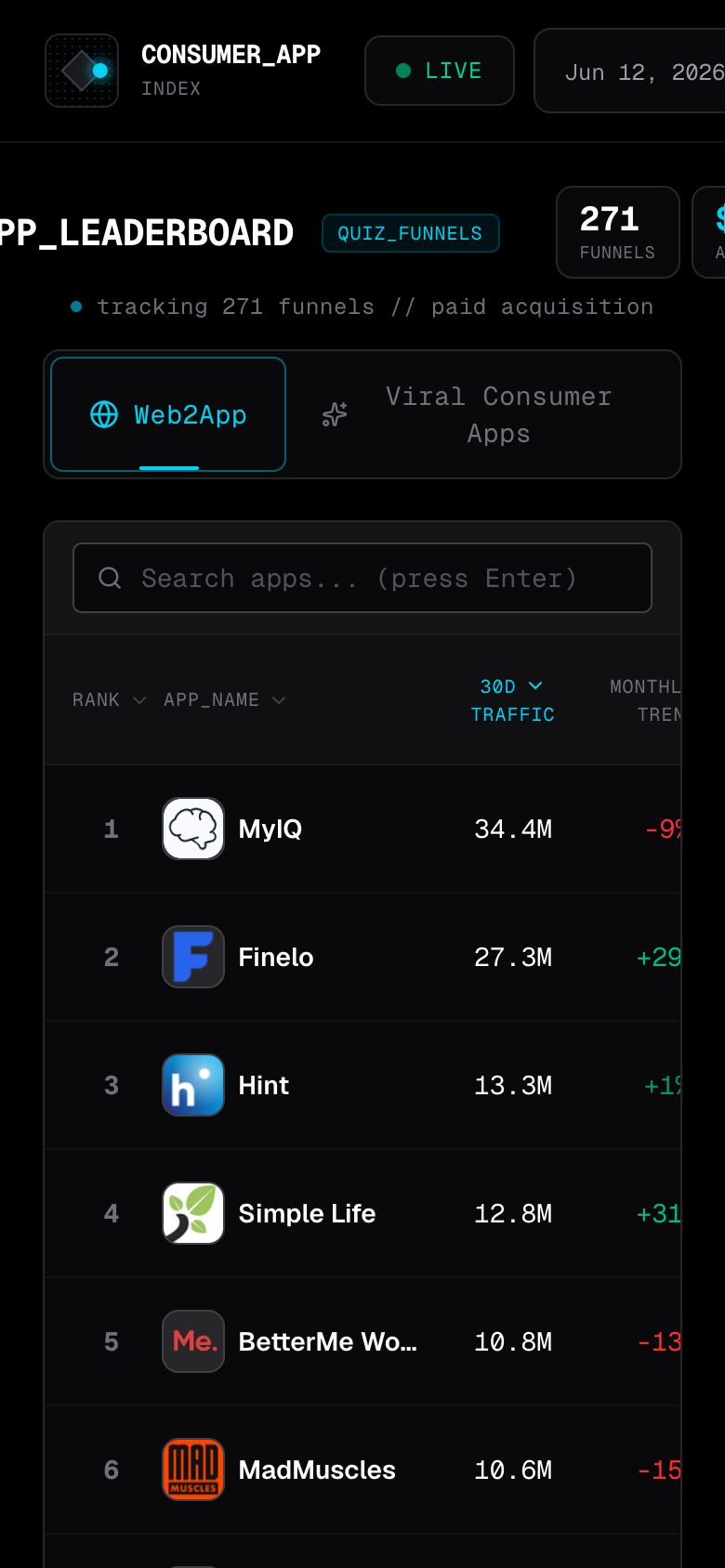
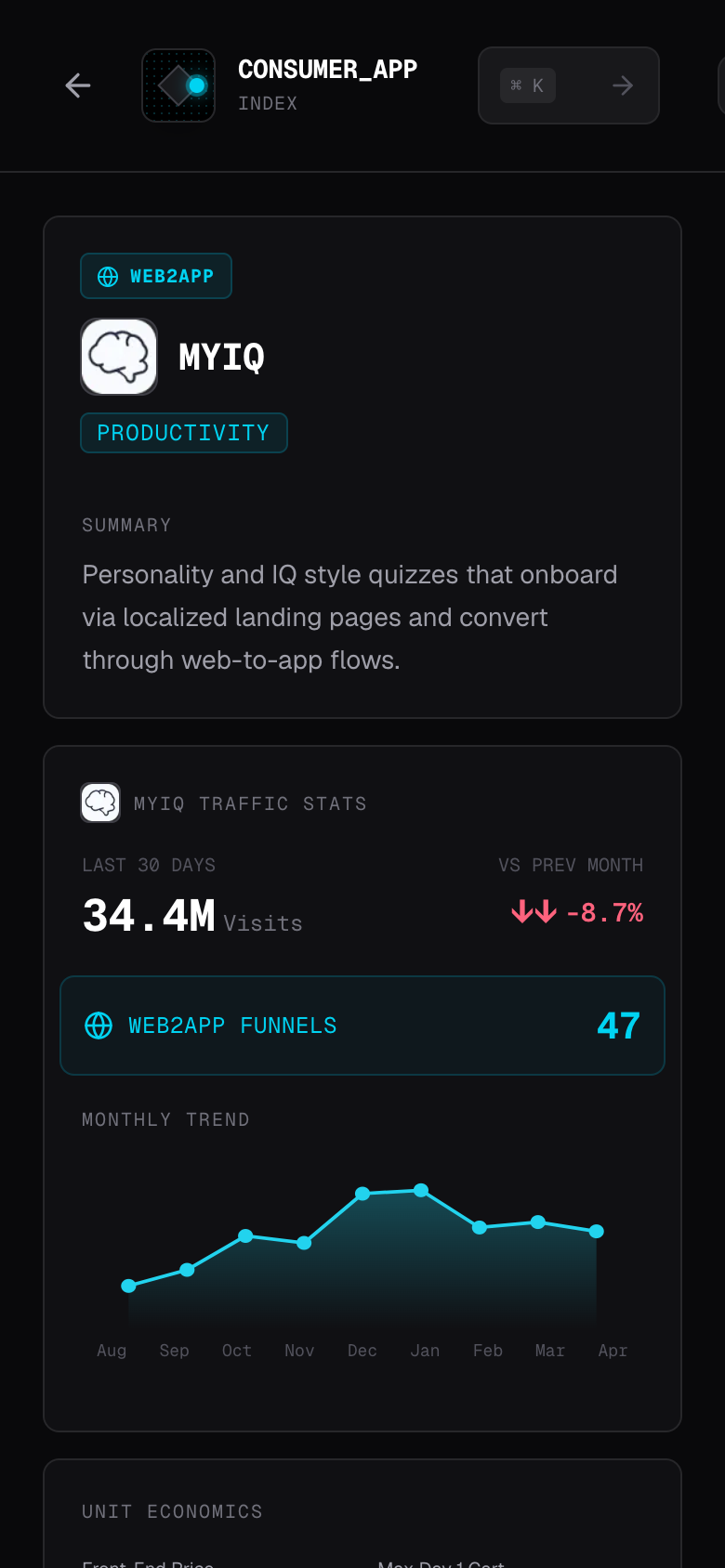
Every screenshot above is one click in our terminal: 250+ web2app apps, 100+ fully captured quiz funnels — entries, gates, paywalls, upsells, cancel flows — plus the ad libraries that feed them. We buy everything so you don't have to.
One member, verbatim: “this shouldn't be public.”
The dare: if you don't find one ad, one quiz flow, or one retention offer that makes you more money — tell us, full refund.
(Members: skip this box. You are this box.)
Already a member? Go here to see the latest inside the app →
